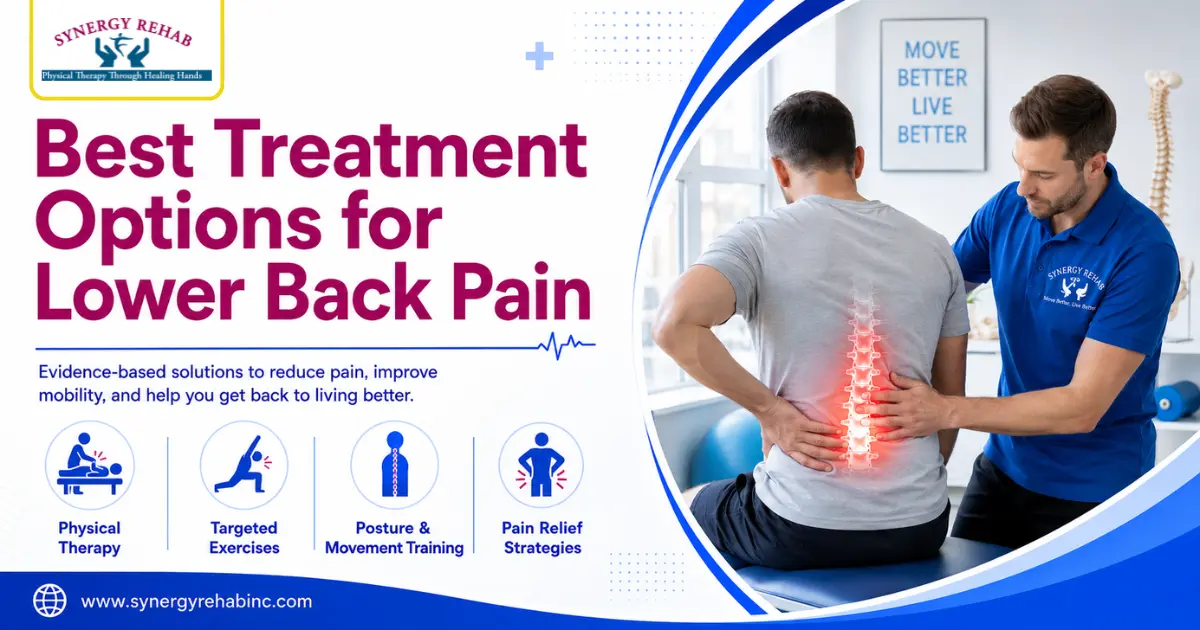
Lower back pain treatment should start with the reason pain began, not with a random exercise or painkiller. A recent strain, a stiff desk posture, a disc-related leg pain, and long-term weakness need different care paths. Most back pain improves with conservative care, and early movement is usually better than long bed rest, but symptoms such as weakness, numbness, fever, trauma, or bowel and bladder changes need medical attention.
The goal of lower back pain treatment is simple: reduce pain, restore safe movement, and stop the same pain from returning.
Best Treatment Options for Lower Back Pain: Comparison Table
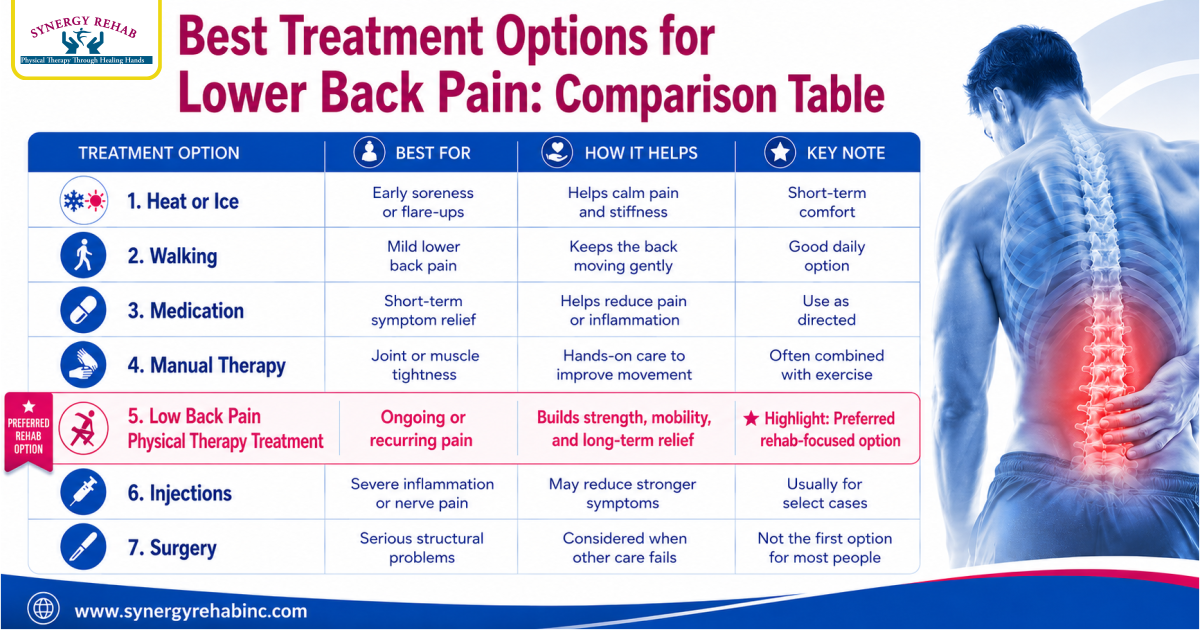
- Heat or Ice
- Best for: Mild flare-ups, stiffness, or a new strain
- Benefit: Gives short-term relief
- Limit: Does not correct the main cause
- Walking
- Best for: Most mild to moderate lower back pain
- Benefit: Maintains movement and circulation
- Limit: Should be adjusted if pain gets worse
- Medication
- Best for: Pain that blocks normal activity
- Benefit: Helps with short-term comfort
- Limit: May have side effects and is not a full solution
- Manual Therapy
- Best for: Stiff joints or tight soft tissue
- Benefit: Improves comfort and mobility
- Limit: Works best when combined with exercise
- Low Back Pain Physical Therapy Treatment
- Best for: Recurring pain, weakness, posture issues, or movement limits
- Benefit: Builds long-term recovery
- Limit: Requires consistency
- Injections
- Best for: Selected nerve or inflammatory pain
- Benefit: May reduce symptoms temporarily
- Limit: Not usually first-line for simple pain
- Surgery
- Best for: Serious structural or nerve problems
- Benefit: Can help selected cases
- Limit: Has a higher risk and longer recovery
A smart lower back pain treatment plan does not chase pain only. It checks how the spine, hips, legs, core, posture, sleep, and work habits are loading the body.
Acute vs Chronic Lower Back Pain Treatment
Acute pain usually starts suddenly and lasts for days to weeks. Chronic pain lasts longer, often beyond 12 weeks, and may involve repeated flare-ups, weakness, fear of movement, poor sleep, or nerve sensitivity.
| Factor | Acute Pain | Chronic Pain |
| Timeline | New or recent pain | Pain lasting more than 12 weeks |
| Main goal | Calm irritation and keep safe movement | Build strength, mobility, confidence, and function |
| Care focus | Heat or ice, walking, short-term medicine if suitable | Exercise plan, lifestyle changes, manual care, stress and sleep support |
| Avoid | Long bed rest and heavy lifting too soon | Relying only on passive relief or pain medicine |
| When to get help | Severe pain, trauma, numbness, weakness, fever | Pain keeps returning, limits work, sleep, walking, or daily tasks |
For acute pain, treatment often starts with gentle movement, short walks, heat or ice, and avoiding triggers. For chronic pain, care should focus on progressive exercise, posture, sleep support, education, and flare-up control.
9 Effective Exercises for Lower Back Pain Relief
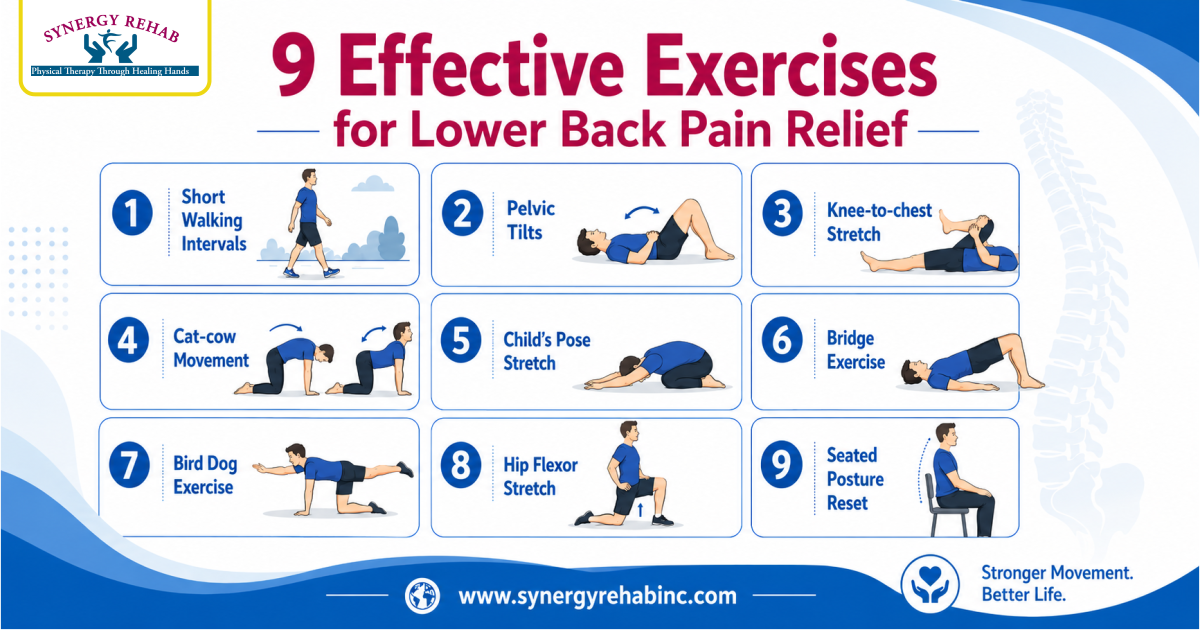
Exercise can help mild lower back pain when no red flags are present. A Physical Therapy Clinic can identify your pain pattern and choose safe exercises based on your mobility, strength, posture, and nerve symptoms.
Use these exercise-based steps:
1. Short Walking Intervals
Walk for 5 to 10 minutes at a comfortable pace. Walking keeps the spine moving without placing heavy stress on the lower back.
2. Pelvic Tilts
Lie on your back with knees bent. Gently flatten your lower back toward the floor, then relax. This helps improve core control without forcing the spine.
3. Knee-to-chest Stretch
Lie on your back and bring one knee toward your chest. Hold gently, then switch sides. Stop if pain travels down the leg.
4. Cat-cow Movement
Start on hands and knees. Slowly round your back, then gently arch it. This can reduce stiffness and improve spinal mobility.
5. Child’s Pose Stretch
Sit back toward your heels with arms forward. Keep the stretch gentle and avoid forcing the position if it increases pain.
6. Bridge Exercise
Lie on your back with knees bent. Tighten your glutes and lift your hips slightly. This strengthens the hips and supports the lower back.
7. Bird Dog Exercise
Start on hands and knees. Extend one arm and the opposite leg while keeping your body steady. This improves balance, core strength, and back control.
8. Hip Flexor Stretch
Tight hip flexors can increase pressure on the lower back. A gentle kneeling hip flexor stretch can help improve posture and movement.
9. Seated Posture Reset
Sit tall, relax your shoulders, keep both feet flat, and gently draw your lower abdomen inward. This helps reduce stress from long sitting.
Exercises can support recovery, but severe, spreading, or lasting pain needs evaluation. Stop any exercise that causes sharp pain, numbness, tingling, or pain below the knee.
How Physical Therapy Helps Lower Back Pain Recovery
Physical Therapy for Back Pain can help when pain keeps returning, movement feels limited, or daily tasks become harder. Instead of giving random exercises, a physical therapist checks posture, walking pattern, hip and spine mobility, core control, leg strength, balance, nerve symptoms, and the movements that trigger pain.
- A low back pain physical therapy treatment plan may include:
- Pain-relieving positions during the early recovery stage.
- Gentle mobility exercises for the hips and spine.
- Core strengthening without forcing painful movements.
- Glute and leg strengthening for better walking and lifting.
- Posture and ergonomic coaching for work, driving, and sleep.
- Manual therapy when stiffness limits movement.
- A home exercise plan that changes as symptoms improve.
- Education on safe bending, lifting, pacing, and flare-up control.
The best low back pain physical therapy treatment is not the hardest workout. It is the right exercise at the right stage. Early care may focus on pain control and safe movement. Later care should build strength, endurance, and confidence for work, sports, and daily activity.
When Lower Back Pain Needs Medical Care
Some symptoms should not be managed with home remedies alone. Seek urgent medical help if back pain comes with:
- New bowel or bladder problems.
- Numbness around the groin or saddle area.
- Fever with back pain.
- Pain after a fall, accident, or direct injury.
- New or worsening leg weakness.
- Severe pain that does not ease with rest.
- Unexplained weight loss.
- Pain spreading below the knee with numbness or tingling.
- Pain that keeps getting worse over several weeks.
Medical care may include a physical exam, strength and reflex tests, imaging, blood tests, or nerve testing when needed. An MRI is not always required early because many back pain cases improve without advanced imaging.
Lower Back Pain Mistakes That Can Delay Recovery
Some choices can delay recovery or make pain worse. Avoid these without proper guidance:
- Long bed rest: Too much rest can increase stiffness and reduce confidence with movement.
- Forcing painful stretches: A stretch should not increase leg pain, numbness, or sharp symptoms.
- Heavy lifting too soon: Returning before control and strength improve can restart the injury.
- Random online workouts: Generic routines may not match your pain pattern.
- Ignoring nerve symptoms: Tingling, numbness, weakness, or pain below the knee needs more caution.
- Using only pain medicine: Medicine may reduce pain, but it does not fix strength, posture, mobility, or lifting habits.
- Wearing a brace all day without advice: A brace may help briefly, but overuse can reduce natural support.
- Passive care only: Massage, heat, or manipulation may help symptoms, but long-term progress usually needs active movement and strength.
Lower back pain treatment works best when passive relief and active recovery are balanced. The body needs enough relief to move, then enough movement to rebuild.
Start Lower Back Pain Recovery With Synergy Rehab
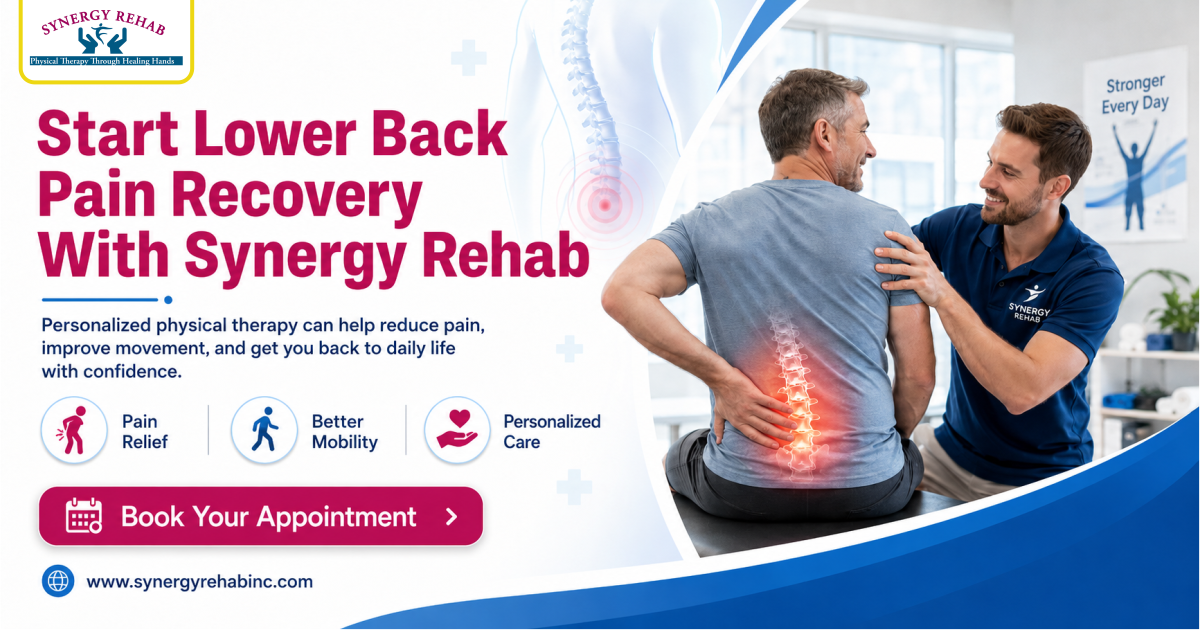
Synergy Rehab helps you move beyond short-term pain relief by finding what is causing your lower back pain and building a recovery plan around your daily needs. If pain keeps returning and limits walking, sitting, lifting, or work, a physical therapy evaluation can help identify posture issues, strength gaps, mobility limitations, and movement triggers.
Synergy Rehab can guide you through safe exercises, hands-on care, posture correction, and a personalized plan to reduce pain and improve long-term movement.
Schedule your visit with Synergy Rehab and take the next step toward stronger, safer lower back recovery.
FAQs About Lower Back Pain Treatment
Q1. What is the best Lower Back Pain Treatment?
The best treatment depends on the cause of pain. Mild pain may improve with walking, heat or ice, and gentle movement. Recurring or limiting pain often needs physical therapy to improve strength, mobility, posture, and movement habits.
Q2. When should I see a physical therapist for lower back pain?
You should see a physical therapist if pain keeps returning, lasts more than a few days, limits walking or sitting, or affects work and daily activity. Therapy can help find the movement problems causing pain.
Q3. Can exercises help lower back pain?
Yes, exercises can help when they match your pain pattern. Gentle mobility, core strengthening, glute strengthening, and walking can support recovery, but sharp pain, numbness, tingling, or leg pain should be checked first.
Q4. Is bed rest good for lower back pain?
Long bed rest is usually not helpful. It can increase stiffness and make movement harder. Short rest may help during severe pain, but gentle movement should return as soon as it is safe.
Q5. How long does lower back pain take to improve?
Many mild cases improve within a few days to a few weeks. Pain that lasts longer, keeps coming back, or spreads into the leg may need a structured treatment plan.
Q6. What symptoms mean lower back pain needs medical care?
Seek care if you have leg weakness, numbness, pain below the knee, fever, pain after a fall, unexplained weight loss, or bowel and bladder changes. These signs need professional evaluation.
Q7. Can physical therapy prevent lower back pain from coming back?
Yes. Physical therapy can improve strength, posture, mobility, lifting habits, and body mechanics. These changes can reduce stress on the lower back and lower the risk of future flare-ups.