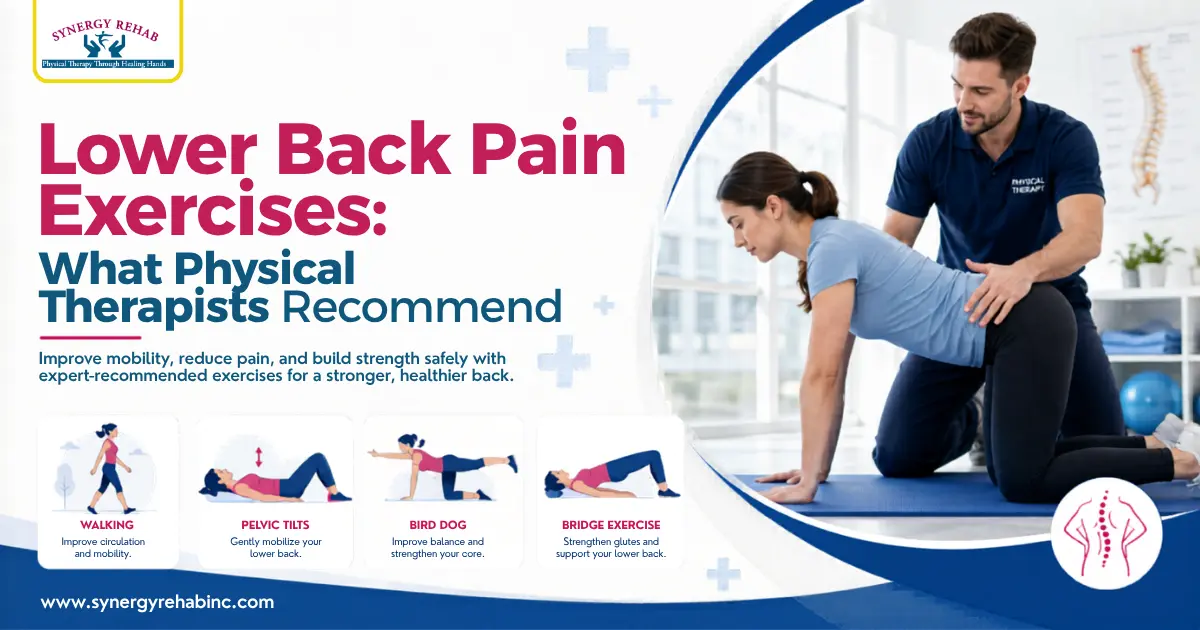
Lower back pain exercises can help improve mobility, reduce stiffness, and rebuild strength, but the safest plan depends on what is causing your pain and how your symptoms behave. Generic back exercises may give short-term relief, but they are not always right for every person. The best exercises for lower back pain should match your pain location, flexibility, strength, posture, and daily movement habits.
Physical therapy exercises for back pain are often used to restore safe movement and reduce stress on the lower spine. Each exercise of lower back care should feel controlled, gentle, and purposeful. If pain increases, spreads into the leg, or causes numbness or weakness, it is better to get checked before continuing.
When Lower Back Pain Exercises May Help
Lower back pain exercises may help when pain is linked to stiffness, mild muscle strain, long sitting, weak core muscles, poor posture, or recurring tightness. These issues often improve when the body gets the right mix of movement, stretching, and strengthening.
Exercises for lower back pain may be useful when your symptoms feel better with gentle motion, walking, position changes, or light stretching. They can also help if your back feels tight in the morning, sore after sitting, or tired after standing for long periods.
5 Best Beginner Lower Back Pain Exercises
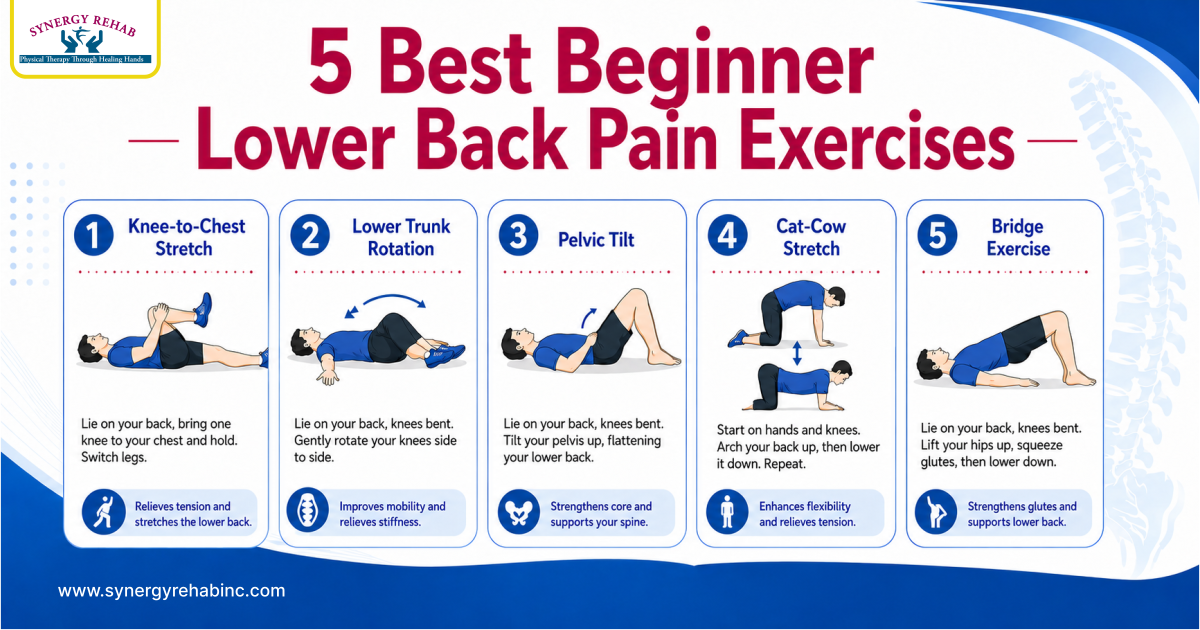
These lower back pain exercises are often used as a starting point because they are gentle and easy to modify. Physical therapy exercises for back pain should be done slowly, without forcing the body into sharp pain.
1. Knee-to-Chest Stretch
Lie on your back with your knees bent. Bring one knee toward your chest and hold gently. This may help reduce stiffness in the lower back and hips.
This can be a helpful exercise for lower back mobility when the movement feels comfortable and does not increase leg symptoms.
2. Lower Trunk Rotation
Lie on your back with both knees bent. Slowly move your knees side to side while keeping your shoulders relaxed. This exercise helps improve spinal mobility and reduce tightness.
These back exercises should feel smooth, not forced.
3. Pelvic Tilt
Lie on your back with knees bent. Gently tighten your stomach muscles and flatten your lower back toward the floor. Hold for a few seconds, then relax.
Pelvic tilts help improve awareness of lower spine position and core control.
4. Cat-Cow Stretch
Start on your hands and knees. Slowly round your back, then gently lower your stomach while lifting your chest. Move through a comfortable range.
This movement may help reduce stiffness and improve control through the spine.
5. Bridge Exercise
Lie on your back with knees bent. Tighten your glutes and slowly lift your hips. Hold briefly, then lower with control.
The bridge helps strengthen the glutes, hips, and core muscles that support the lower back.
Best Stretches to Support Lower Back Pain Relief
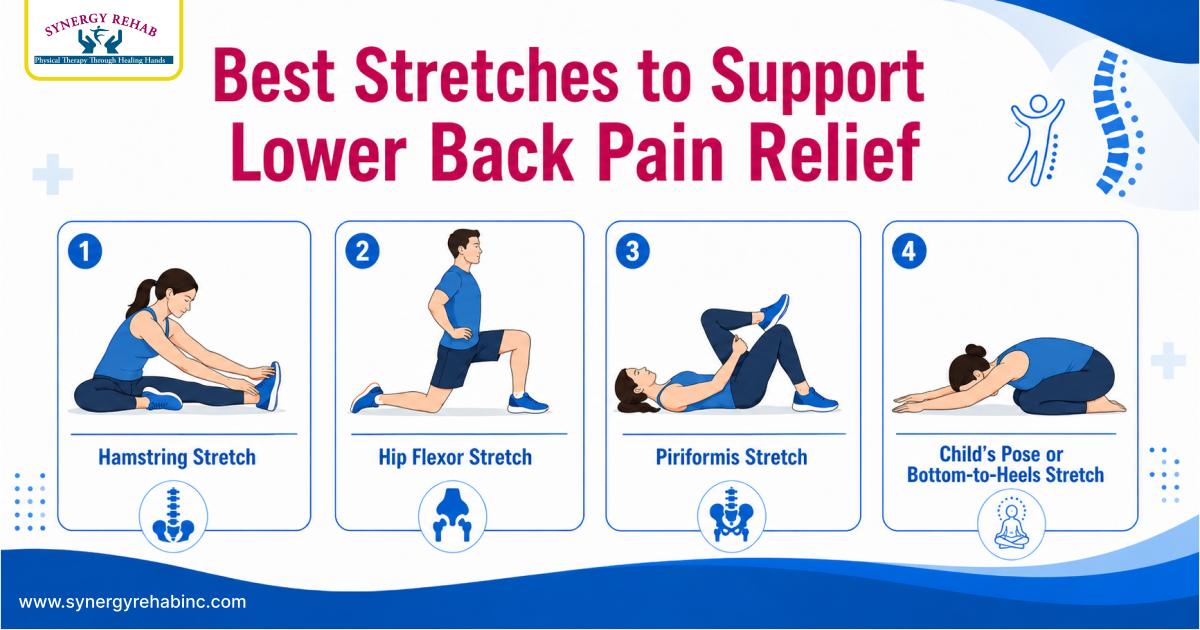
Stretching can help when tight hips, hamstrings, or glutes add stress to the lower back. These exercises for lower back pain should feel like a mild stretch, not sharp pain.
1. Hamstring Stretch
Lie on your back and gently raise one leg with a towel behind the thigh. Keep the stretch comfortable. Tight hamstrings can increase stress on the pelvis and lower back.
2. Hip Flexor Stretch
Start in a half-kneeling position and gently shift forward until you feel a stretch in the front of the hip. Tight hip flexors can affect posture and lower back comfort.
3. Piriformis Stretch
Lie on your back and cross one ankle over the opposite knee. Gently pull the leg toward your chest. This may help with tightness around the hip and buttock area.
4. Child’s Pose or Bottom-to-Heels Stretch
Start on hands and knees, then sit your hips back toward your heels. Reach your arms forward and breathe slowly. This stretch may help relax the lower back when tolerated.
Strengthening Exercises for Lower Back Support
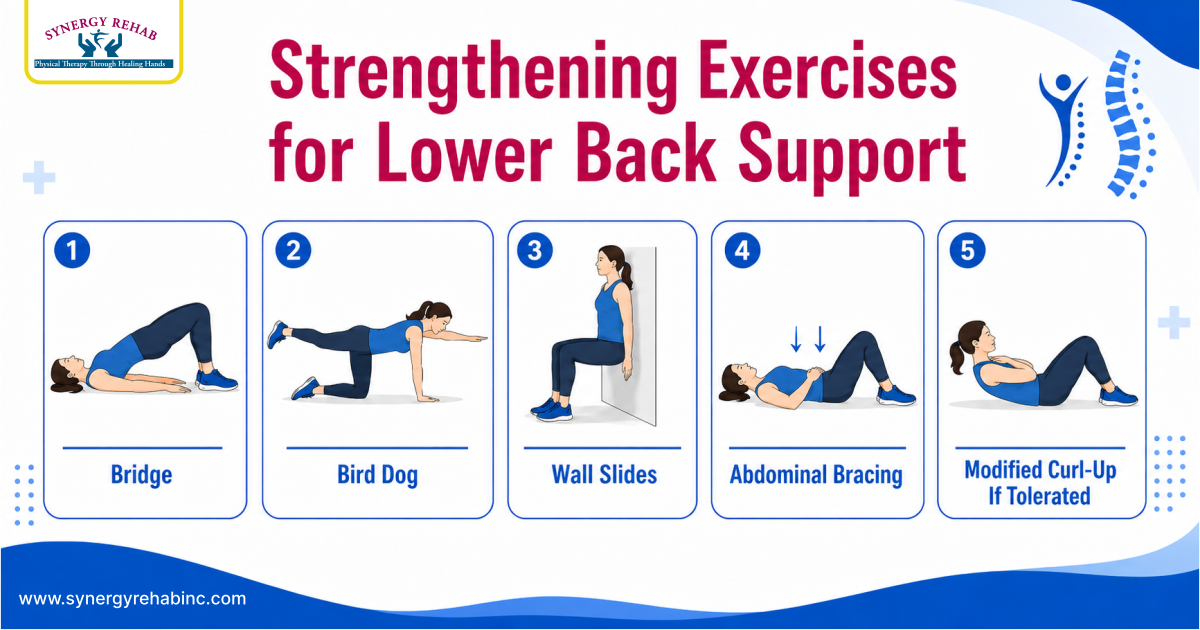
Strength work is important because stretching alone may not solve recurring back pain. Physical therapy exercises for back pain often focus on the core, hips, glutes, and postural muscles.
1. Bridge
The bridge strengthens the glutes and helps improve hip support. It is one of the most useful back exercises for people with weak hip and core control.
2. Bird Dog
Start on hands and knees. Slowly extend one arm and the opposite leg while keeping your trunk steady. This exercise of lower back stability helps train balance, control, and spinal support.
3. Wall Slides
Stand with your back near a wall and slowly bend your knees into a small squat. Keep the movement controlled. Wall slides can help strengthen the legs and support better lifting mechanics.
4. Abdominal Bracing
Lie on your back or sit upright. Gently tighten your stomach as if preparing for a cough. Do not hold your breath. This helps activate deep core support.
5. Modified Curl-Up If Tolerated
Lie on your back with one knee bent and one leg straight. Gently lift your head and shoulders slightly while keeping the lower back controlled. Stop if it causes pain or strain.
Strength-based back exercises should be progressed slowly. More repetitions are not always better if form is poor.
Exercises That May Not Be Right for Back Pain for Everyone
Not every back movement helps every person. The right choice depends on your symptoms, pain pattern, and how your body responds.
- Forward bending exercises: These may feel helpful for some people, but repeated forward bending may irritate certain disc-related symptoms.
- Backward bending exercises: These may help some back pain patterns, but repeated backward bending may not suit people with stenosis-like symptoms.
- Deep twisting movements: Twisting too far can increase strain if your lower back is already irritated or stiff.
- Aggressive hamstring stretches: These may worsen symptoms if leg pain, numbness, or nerve irritation is present.
- High-repetition core exercises: Too many sit-ups, crunches, or fast core movements can overload the lower back if control is poor.
- Random online exercise routines: A general routine may not match your pain cause, strength level, or movement limits.
8 Common Exercise Mistakes to Avoid When Dealing with Back Pain
Lower back pain exercises should be done with control, comfort, and awareness. Avoid these common mistakes:
- Pushing Through Sharp Pain: Mild stretching may feel normal, but sharp or worsening pain is a sign to stop.
- Holding Your Breath: Breathing normally helps your core work better and keeps the movement controlled.
- Moving Too Fast: Quick movements can increase strain and make it harder to use proper form.
- Copying Random Back Exercises: A routine found online may not match your pain pattern, strength level, or symptoms.
- Skipping Strength Work: Stretching may reduce tightness, but strengthening helps support the lower back long term.
- Doing only Stretching: A balanced plan should include mobility, strength, posture control, and gradual activity.
- Ignoring leg symptoms: Pain, numbness, tingling, or weakness that travels into the leg should not be ignored.
- Continuing When Symptoms Worsen: Stop and get checked if pain increases, numbness develops, weakness appears, or symptoms move farther down the leg.
Physical therapy for back pain in Southfield can help you learn which movements fit your body and which exercises need to be modified for safer progress.
Start Lower Back Pain Exercises Safely With Synergy Rehab
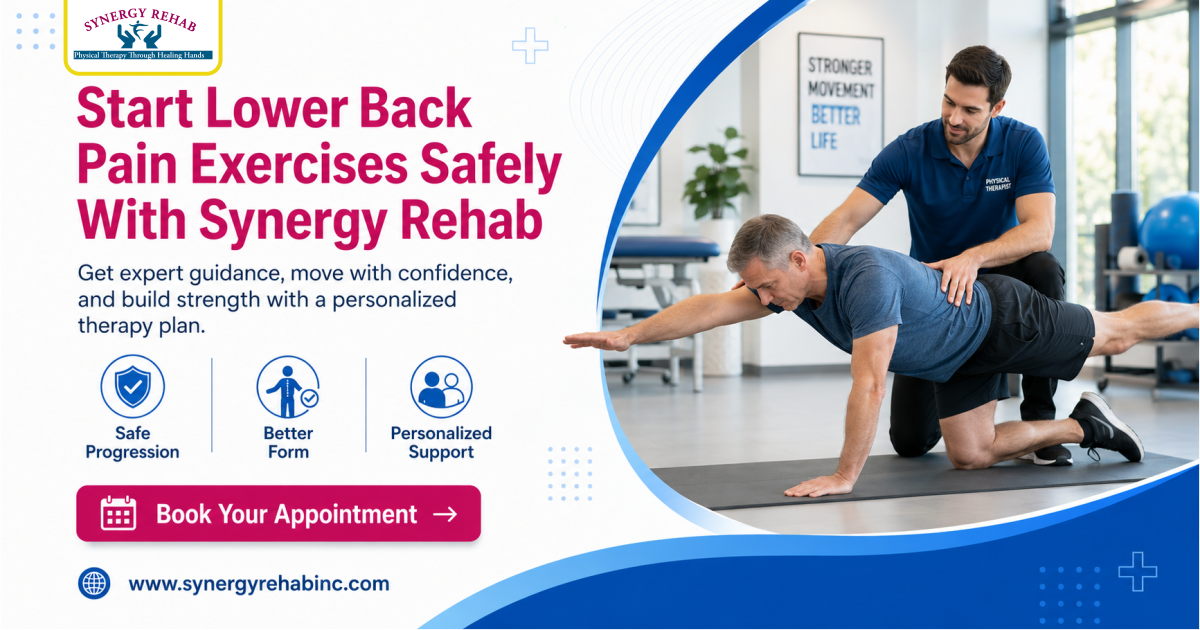
Synergy Rehab helps patients choose safe exercises for lower back pain based on symptoms, strength, posture, and movement limits. Instead of copying a general routine, Physical therapy for back pain in Southfield can help you follow a plan that fits your body and reduces the risk of flare-ups.
A physical therapist can check how your back, hips, core, and legs move together, then guide each exercise with proper form. Your plan may include gentle mobility work, strengthening, posture training, and activity advice to help you move with more confidence.
Schedule a visit with Synergy Rehab to start lower back pain exercises safely and build a routine that supports daily movement, work, and long-term recovery.
FAQs About Lower Back Pain Exercises
Q1. What are the best lower back pain exercises to start with?
Gentle lower back pain exercises like pelvic tilts, knee-to-chest stretch, lower trunk rotation, cat-cow stretch, and bridges are common starting options. The right exercise depends on your symptoms and comfort level.
Q2. Can exercises for lower back pain make pain worse?
Yes. Exercises for lower back pain can make symptoms worse if they are too intense, done with poor form, or do not match your pain pattern. Stop if pain becomes sharp, travels down the leg, or causes numbness or weakness.
Q3. How often should I do lower back pain exercises?
Many people start with a short routine once a day, but frequency depends on the cause of pain, symptom severity, and exercise tolerance. A physical therapist can help set the right schedule.
Q4. Are stretches enough for lower back pain relief?
Stretches may reduce tightness, but they are usually not enough by themselves. A balanced plan often includes mobility, strengthening, posture control, walking, and activity changes.
Q5. When should I see a physical therapist for lower back pain?
You should see a physical therapist if pain keeps returning, limits walking or sleep, affects daily activity, or comes with leg pain, tingling, numbness, or weakness.
Q6. What does physical therapy for back pain in Southfield include?
Physical therapy for back pain in Southfield may include a movement exam, posture check, strength testing, mobility work, core and hip exercises, manual therapy, and a home exercise plan.
Q7. Can Synergy Rehab help with safe lower back pain exercises?
Yes. Synergy Rehab can help identify which lower back pain exercises fit your symptoms, strength, posture, and movement needs so you can build a safer routine.