

Back pain can build slowly from repeated daily stress, not only from one sudden injury. Many people notice stiffness after long sitting, poor movement, weak support muscles, poor sleep positions, or small warning signs they ignore for weeks. Daily Habits Causing Back Pain often look harmless at first, but repeated strain can affect the spine, muscles, joints, hips, and nerves over time.
Back pain can build slowly from repeated daily stress, poor movement, long sitting, weak support muscles, poor sleep positions, and ignored warning signs.
Why Daily Habits Can Cause Back Pain
The back needs regular movement, strength, and support during daily tasks. Daily Habits Causing Back Pain can increase spinal stress, tighten hips, weaken core and glute support, and make the lower back work harder than normal.
Small stresses from long sitting, rounded shoulders, poor lifting, weak muscles, or repeated bending can add up over time. When these habits persist daily, the body may lose flexibility, movement control, and tolerance for normal activities. This can turn mild stiffness into recurring back pain.
10 Common Daily Habits That Lead to Back Pain
1. Sitting for Long Hours Without Movement
Sitting for hours can place steady pressure on the lower back, especially when the chair does not support the spine. Sitting too long is common among people who work at desks, drive for long periods, or relax on soft couches after work.
A better habit is to change position often. Stand, walk, or stretch for a short time every 30 to 45 minutes. Movement helps reduce stiffness and keeps blood flow active in the muscles that support your back.
2. Slouching at a Desk or on the Couch
Slouching shifts the head, shoulders, and spine out of a comfortable position. Over time, slouching can lead to tightness across the shoulders, stiffness in the mid-back, or aching in the lower back.
This does not mean you need to sit all day. The goal is to avoid prolonged rounds. Use a supportive chair, keep your feet flat, and bring your screen closer to eye level.
3. Looking Down at Your Phone Too Often
Phone posture can place extra stress on the neck and upper back. When the head drops forward, muscles in the neck, shoulders, and upper spine have to work harder to hold that position.
Hold the phone higher, take screen breaks, and avoid scrolling for long periods while lying on the couch or bed. This simple change can reduce one of the most overlooked Daily Habits Causing Back Pain.
4. Sleeping in Poor Positions
Sleep should help the body recover, but poor sleep posture can leave the back stiff in the morning. Sleeping on the stomach, twisting the spine, or using an unsupportive mattress may increase strain on the spine.
Side sleepers may feel more comfortable with a pillow between their knees. Back sleepers may benefit from support under the knees. Better sleep alignment can reduce everyday habits that cause back pain, which start before the day even begins.
5. Lifting Objects With Your Back Instead of Your Legs
Lifting with a rounded back, twisting while holding weight, or reaching too far from the body can irritate the lower back. This can happen when lifting groceries, laundry baskets, children, boxes, or gym weights.
Keep the object close, bend at the hips and knees, and avoid twisting while carrying weight. Safe lifting matters because Daily Habits Causing Back Pain often come from repeated small lifts, not just one heavy object.
6. Carrying Heavy Bags on One Side
A heavy purse, laptop bag, backpack, or work bag can pull one side of the body down. This may create uneven stress through the shoulders, spine, hips, and lower back.
Use both straps when possible, reduce unnecessary items, and switch sides if you carry a single-strap bag. Uneven carrying is one of the everyday habits causing back pain that many people overlook.
7. Wearing Unsupportive Shoes or High Heels
Shoes affect how the feet hit the ground, how the legs move, and how the spine absorbs force. Unsupportive shoes, worn-out soles, or high heels may change walking mechanics and increase stress through the hips and lower back.
Choose supportive footwear for long workdays, errands, and exercise. If pain increases after wearing certain shoes, that pattern is worth noticing.
8. Skipping Core and Glute Strengthening
The core and glutes help control the pelvis and support the spine during movement. When these muscles are weak, the lower back may take on extra work.
Gentle strengthening can improve control, balance, and confidence. Exercises should match your pain level and movement ability, especially if Daily Habits Causing Back Pain are already affecting normal tasks.
9. Doing Sudden Weekend Chores or Heavy Workouts
Many people sit most of the week and then do heavy chores, yardwork, sports, or intense workouts on the weekend. This sudden jump in activity can overload muscles and joints that are not prepared for the demand.
Build activity gradually. Warm up before heavy work, take breaks, and avoid rushing through lifting, twisting, or bending tasks.
10. Ignoring Early Back Pain and Stiffness
Mild stiffness may improve with movement and better habits, but pain that keeps returning should not be ignored. Early symptoms can show that the body is not tolerating a routine, posture, or workload well.
Ignoring pain is one of the most important Daily Habits Causing Back Pain because it delays care. If pain changes your walking, sleep, strength, or daily activity, it may be time to get checked.
10 Simple Habit Changes That Can Reduce Back Strain
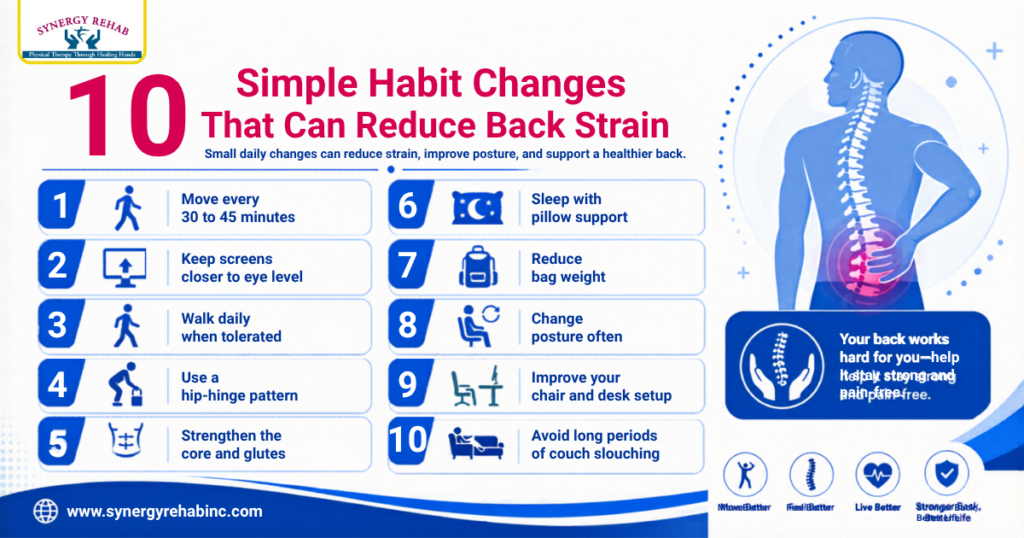
Use these practical changes to reduce strain from everyday habits causing back pain:
1. Move every 30 to 45 minutes
Short walking breaks can reduce stiffness from prolonged sitting and back pain.
2. Keep screens closer to eye level
This helps limit strain on the neck, shoulders, and upper back.
3. Walk daily when tolerated
Regular walking supports circulation, mobility, and confidence.
4. Use a hip-hinge pattern
Bend at the hips and knees, not the lower back.
5. Strengthen the core and glutes
Better muscle support can reduce repeated stress on the spine.
6. Sleep with pillow support
Use a pillow between or under your knees, depending on your sleep position.
7. Reduce bag weight
A lighter, balanced load reduces uneven pull on the spine.
8. Change posture often
This helps with back pain caused by poor posture because the body needs movement, not one fixed position.
9. Improve your chair and desk setup
A better workstation can reduce back pain from sitting too long during work hours.
10. Avoid long periods of couch slouching
This can help reduce slouching back pain linked with evening routines.
How Physical Therapy Can Help With Habit-Related Back Pain

Synergy Rehab helps identify which daily habits, posture patterns, and movement limits may be placing extra stress on your back. During Physical Therapy for Back Pain in Southfield, a therapist may check spinal motion, hip mobility, core strength, walking pattern, balance, and lifting mechanics.
Your care plan may include mobility work, strengthening, posture coaching, desk setup advice, and safer ways to bend, lift, sit, and move. This helps reduce habit-related strain and supports better long-term back function.
FAQ About Daily Habits Causing Back Pain
Q1. Can daily habits really cause back pain?
Yes. Daily Habits Causing Back Pain can include long sitting, poor posture, weak core muscles, poor lifting technique, and sleeping without proper support. These habits may repeatedly stress the spine, hips, muscles, and joints over time.
Q2. What daily habit causes back pain most often?
One of the most common habits is sitting for long hours without movement. Sitting too long often leads to back pain when the hips get stiff, the lower back stays loaded, and the body does not get enough movement breaks.
Q3. Can sleeping position affect back pain?
Yes. Sleeping on the stomach, twisting the spine, or using an inadequate pillow can increase morning stiffness. Side sleepers may feel better with a pillow between the knees, while back sleepers may benefit from support under the knees.
Q4. What habits help reduce back strain?
Helpful habits include moving every 30 to 45 minutes, walking daily when tolerated, improving desk setup, keeping screens at eye level, using proper lifting form, strengthening the core and glutes, and reducing heavy one-sided bag use.
Q5. When should I see a physical therapist?
Consider Physical Therapy for Back Pain in Southfield if back pain keeps returning, affects work, sleep, walking, exercise, or daily chores. A physical therapist can check movement habits, strength, posture, mobility, and lifting mechanics.