
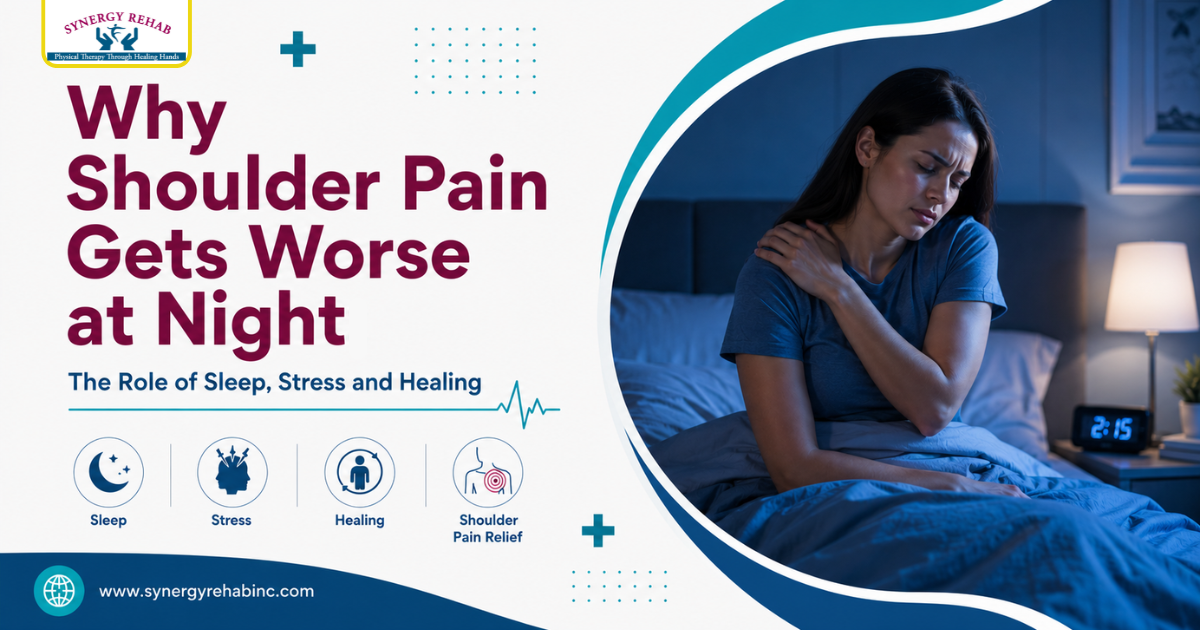
| Shoulder pain often feels worse at night because lying down shifts pressure and blood flow around the joint, you roll onto the shoulder, and there are fewer distractions. Poor sleep and stress can amplify the pain. Better sleep position and treating the tendon usually ease shoulder pain at night. |
The 2am Shoulder Throb
You were fine all day. Then you lay down, and within an hour the ache arrived, sharp enough to keep you staring at the ceiling. If that sounds familiar, you are in good company. Shoulder pain at night is one of the most common complaints we hear, and it has real, understandable causes. It is also one of the first things good treatment tends to improve.
Why Does Shoulder Pain Get Worse at Night?

A few things line up against you after dark. Lying down changes the pressure and blood flow around the shoulder, so an irritated tendon can throb. Roll onto that side and you compress the sore tissues directly. And with the day’s distractions gone, your brain simply notices the pain more. None of it means the shoulder is getting worse. It means the conditions at night make existing irritation louder.
The Sleep and Shoulder Pain Loop
| Expert Insight: Pain and Sleep Feed Each Other. The link between sleep and shoulder pain runs both ways. Pain disrupts sleep, and poor sleep quality lowers your tolerance to pain the next day. Breaking the loop, with better sleep habits and treatment of the tendon, tends to improve both. Sources: NIH NIAMS; sleep and pain research summaries. |
This is why night pain can feel like it snowballs. A rough night leaves you more sensitive the next day, which can mean a rougher night to follow. The encouraging flip side is that improving one part of the loop often helps the rest.
How Stress Feeds Shoulder Pain
Stress is not just in your head. It raises muscle tension, especially around the neck and shoulders, and it heightens how the nervous system processes pain. The result is that stress and shoulder pain often travel together, and a tense, worried evening can set up a painful night. Simple wind-down habits are not a cure, but they genuinely help.
Rotator Cuff Night Pain: What Helps
For rotator cuff night pain, small changes add up. Avoid sleeping directly on the sore shoulder. Support the arm with a pillow so the joint is not stretched or compressed. Keep a steady sleep routine, since better sleep quality builds pain tolerance. And treat the underlying tendon during the day, because the most reliable fix for night pain is a shoulder that is healing.
| Habits That Help | Habits That Hurt |
|---|---|
| Sleeping on your back or pain-free side | Sleeping directly on the sore shoulder |
| Supporting the arm with a pillow | Letting the arm hang or overstretch |
| A steady wind-down routine | Screens and stress right up to bedtime |
How a Physical Therapist in Southfield Can Help
If night pain keeps stealing your sleep, you do not have to wait it out. A Physical Therapist in Southfield can find why your shoulder hurts, treat the cause, and coach you on sleep setup that protects it. In Michigan you can book directly, without a referral. For the full picture, see our complete guide to rotator cuff disorders.
Sleep Through the Night Again

If shoulder pain at night is waking you night after night, let us help you break the cycle. Book a shoulder assessment with Synergy Rehab, and we will treat the cause and set you up for better rest.
Call (248) 298-0433 or visit synergyrehabinc.com. Find us at Farmbrook Medical Building 2, 29877 Telegraph Rd, Suite 303, Southfield, MI, open Monday to Friday. No referral is needed in Michigan.
FAQs About Shoulder Pain at Night
Q1. Why Does My Shoulder Hurt More When I Lie Down?
Lying down shifts pressure and blood flow around the joint, and rolling onto the shoulder compresses irritated tendons. With fewer daytime distractions, your brain also notices the pain more. This is why an irritated shoulder often feels louder at night than during the day.
Q2. How Are Sleep and Shoulder Pain Connected?
The link between sleep and shoulder pain runs both ways. Pain disrupts sleep, and poor sleep quality lowers your pain tolerance the next day. That can create a cycle, which is why improving sleep habits and treating the shoulder together works best.
Q3. Can Stress Make Shoulder Pain Worse?
Yes. Stress raises muscle tension around the neck and shoulders and heightens how the nervous system processes pain, so stress and shoulder pain often occur together. A calmer evening routine will not cure the shoulder, but it can genuinely reduce night pain.
Q4. What Is the Best Way to Sleep With Rotator Cuff Night Pain?
Avoid lying on the sore shoulder. Sleep on your back or your pain-free side, and support the arm with a pillow so the joint is not stretched or squeezed. A steady routine that improves sleep quality also helps reduce rotator cuff night pain.
Q5. Will Night Pain Go Away on Its Own?
Sometimes it eases, but often it lingers until the underlying shoulder problem is treated. The most reliable way to quiet shoulder pain at night is a healing tendon, which usually means active rehab plus better sleep setup rather than waiting and hoping.
Q6. When Should I See a Physical Therapist for Night Pain?
See a physical therapist if night pain is frequent, disrupts your sleep, or comes with weakness or loss of movement. In Michigan you can book directly, without a referral, to find the cause and start treatment that improves both pain and sleep.