



The Short Answer
| Most neck pain eases without surgery. For the majority of people, the fastest neck pain relief comes from staying gently active, improving posture, and doing targeted neck pain exercises, supported by hands-on physical therapy. Imaging is rarely needed early. See a physical therapist if pain is severe, follows an injury, or spreads into the arm. |
Your Neck Pain Does Not Have to Run Your Day
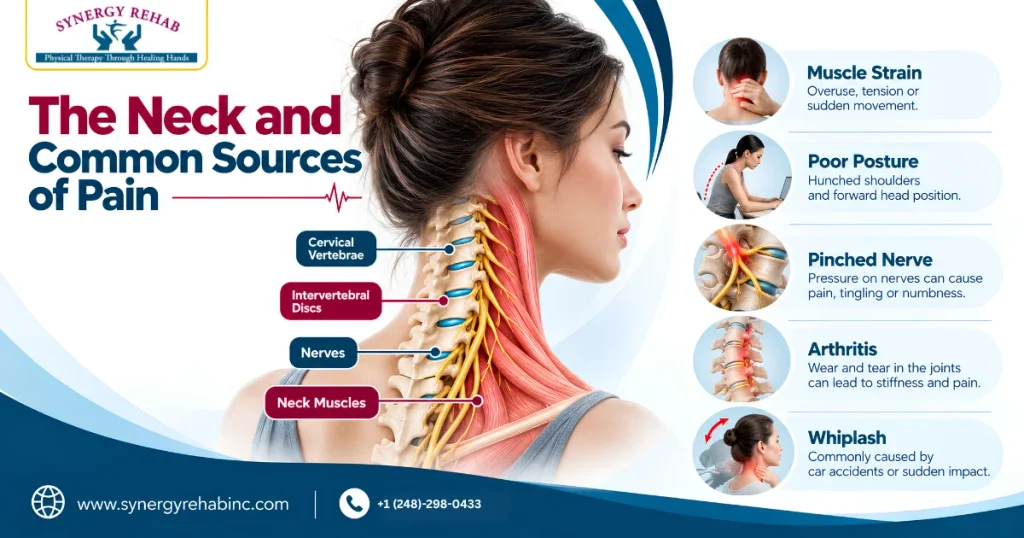
It’s hard to ignore a sore neck. It nags when you check a blind spot, stiffens by mid-afternoon, and can turn a good night’s sleep into a restless one. For a huge number of adults, neck pain is a regular visitor, and it tends to bring tension headaches, tight shoulders, and short tempers along with it.
Here’s the reassuring part. The great majority of neck problems settle without injections or surgery. We see it every week at Synergy Rehab in Southfield. People walk in stiff and worried, half-expecting bad news, and leave with a clear plan built on movement, posture, and strength. This guide covers the common neck pain causes, the treatment and exercises that actually work, and when it’s time to see a physical therapist. Consider it your complete guide to lasting neck pain relief.
What Causes Neck Pain?
Most neck pain causes fall into a few groups. Muscle and joint strain from posture, stress, and long hours at a screen are common. Age-related changes, such as wear in the discs and joints, can also cause it. Nerve problems can also occur when a disc or bony change presses on a nerve, and pain, numbness, or tingling travels into the shoulder or arm, a pattern often linked to a pinched nerve in the neck. Posture plays a bigger role than people expect, and a forward head posture, where the head drifts ahead of the shoulders, loads the neck far more than an upright one. Pinpointing your specific pattern is the first step toward lasting relief from neck pain. Understanding the causes of your neck pain also points to the right treatment.
Acute vs Chronic Neck Pain
Not all neck pain is the same. Acute neck pain comes on quickly, often after sleeping awkwardly, a sudden movement, or a minor strain, and it usually settles within days to a couple of weeks.
Chronic neck pain lingers for months, often driven by posture, repetitive load, stress, or an old injury that never fully recovered. The two are handled a little differently.
Acute pain focuses on calming the flare and restoring easy movement, while chronic neck pain leans on steady strengthening, posture change, and addressing the daily habits that keep it going.
How Is Neck Pain Diagnosed?

Good neck care starts with a conversation and a hands-on exam, not a scan. We want to know when the pain started, what makes it better or worse, whether it travels into the arm, and what you can and cannot do. Then we test the neck directly, how it moves, how strong it is, and which movements reproduce your pain. Those findings tell us a great deal about what is going on and how irritable things are. Imaging has its place, but it is rarely the first step.
| Expert Insight: Scans Can Mislead. Disc bulges and age-related changes show up on the scans of plenty of people who have no pain at all, and they grow more common with age. A scan finding does not always explain your symptoms, which is why we start with a clinical exam—sources: American Academy of Orthopaedic Surgeons; NIH NIAMS. |
Neck Pain Treatment: What Actually Helps
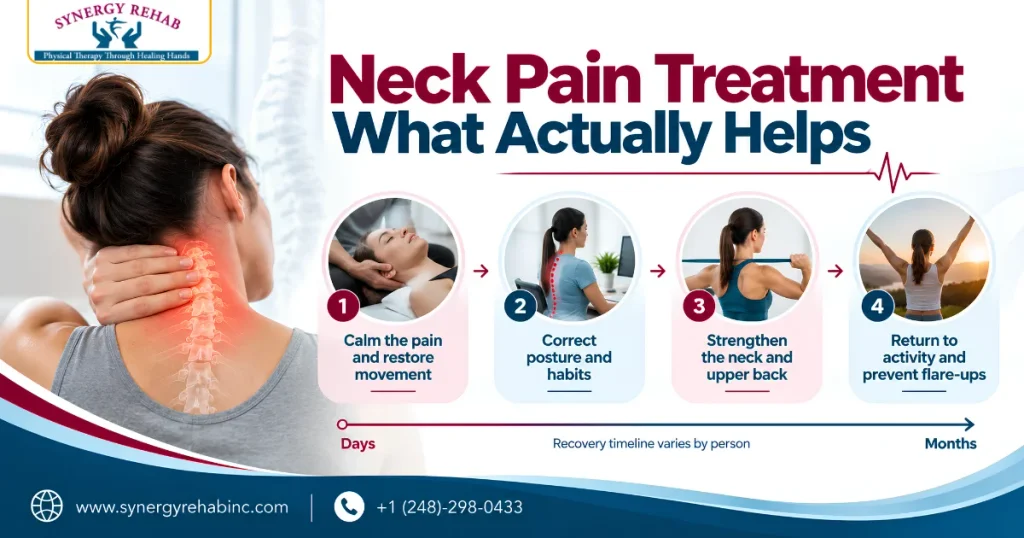
For most people, effective neck pain treatment doesn’t involve injections or surgery. Exercise-based physical therapy is the first-line approach, and it does what a scan never can: it changes how your neck moves, loads, and copes with daily life. A good plan usually blends four things:
- Calm the Irritation: Gentle movement and hands-on therapy to settle the flare.
- Restore Movement: Gently restore the neck to its full, comfortable range.
- Build Strength: Strengthen the neck and upper back to support the head.
- Fix the Habits: The posture and daily patterns that help or hinder recovery.
The plan is active, specific, and paced to you. Done well, this neck pain treatment delivers lasting neck pain relief.
Why Rest and a Collar Are Not the Answer
Resting a sore neck feels sensible, and a short break from an aggravating activity does help early on. But long rest and soft collars tend to backfire. The muscles that support the neck weaken quickly, the joints stiffen, and the pain often returns the moment you return to normal life. The neck does not need to be held still into weakness. It needs gentle, progressive movement. That is the whole idea behind easing back into activity rather than bracing against it.
| Expert Insight: Movement Is the Treatment. Clinical guidance for neck pain points to exercise, movement, and manual therapy as the core of care, not rest or immobilization. Staying gently active, guided well, is one of the most effective ways to recover. Sources: Journal of Orthopaedic and Sports Physical Therapy; American Physical Therapy Association. |
Neck Pain Exercises You Can Start Today
The right neck pain exercises are the engine of recovery. Early on, they are gentle, slow range-of-motion moves that ease stiffness without flaring the pain. As your neck settles, they build toward strengthening the deep neck muscles and upper back that support your posture. Chin tucks, gentle rotations, and shoulder blade squeezes are common starting points. The wrong moves, or the right ones done too hard, can aggravate things, which is why the plan matters as much as the moves. We walk through safe, specific options in our guide to the 10 best neck pain exercises.
Simple Ways to Ease Neck Pain at Home
Alongside exercise, small daily changes add up fast. These are some of the most useful ways to ease neck pain between visits:
- Raise Your Screen: Bring the top of your monitor to eye level so your head stays up.
- Take Movement Breaks: Stand, roll the shoulders, and move every 30 to 45 minutes.
- Fix Your Pillow: Use one that keeps your neck level with your spine.
- Manage Stress: It quietly tightens the neck and shoulders, so unwind where you can.
- Use Heat or Ice: Heat relaxes tight muscles; a short ice session calms a fresh flare.
None of this replaces a proper plan, but it’s a practical way to reduce neck pain and keep small issues from becoming big ones. These steps work best alongside a physical therapist’s plan for neck pain.
Can Neck Pain Cause Headaches?
Yes, often. When the joints and muscles at the top of the neck are irritated, they can refer pain into the head, a pattern known as a cervicogenic headache. It usually shows up as a steady ache that starts at the base of the skull and spreads forward, often on one side. The good news is that treating neck pain often eases these headaches, too. In our guide, we explain the link and what to do about it.
When Neck Pain Lingers: Persistent and Chronic Cases
Sometimes neck pain hangs around for weeks or months. Chronic neck pain is rarely about one single thing. It is usually a mix of posture, muscle weakness, stress, sleep, and habits that keep feeding the problem. The good news is that persistent pain still responds well to the right plan; it simply takes a bit more consistency. In our guide to persistent neck pain and its common causes, we break down the common drivers and what you can do about each.
Common Neck Conditions at a Glance
The table below compares the conditions we see most often. Treat the ranges as general. Your own timeline is confirmed at assessment.
| Condition | What It Is | Typical First-Line Care | General Recovery Range |
|---|---|---|---|
| Muscle Strain | Overworked or tight neck muscles | Gentle movement, posture, strengthening | Days to a few weeks |
| Pinched Nerve | A neck nerve under pressure | Nerve-focused rehab and exercises | Several weeks to a few months |
| Cervical Arthritis | Age-related joint and disc wear | Exercise, movement, load management | Ongoing, often improves in weeks |
| Whiplash | Rapid neck strain, often from a crash | Early gentle movement and rehab | Weeks to months, varies |
| Cervicogenic Headache | Headache driven by the neck | Manual therapy and specific exercises | Several weeks to a few months |
Everyday Habits That Trigger Neck Pain
Two everyday patterns cause a surprising share of neck pain. The first is sleep. The wrong pillow or position can leave you with a stiff neck after sleeping that takes hours to ease. The second is desk work, where hours at a screen pull the head forward and load the neck and shoulders. Both are very fixable. We cover them in our guides on stiff neck after sleep and neck pain from desk work, with simple setup and habit changes that make a real difference.
When to See a Physical Therapist for Neck Pain
Most neck pain settles on its own, but some signs mean it’s time to get it checked. See a physical therapist for neck pain if:
- It Lingers: The pain lasts more than a week or two, or keeps coming back.
- It Followed an Injury: A fall, a crash, or a sudden wrench of the neck.
- It Limits Your Day: Stiffness or pain that interferes with work or sleep.
Some symptoms call for prompt medical care, not just physical therapy. Get seen quickly for weakness or numbness spreading down the arm, problems with balance or coordination, or severe pain after trauma. Early, guided care usually means a faster, fuller recovery, and in Michigan you can book directly.
How a Physical Therapist in Southfield Can Help
Good news for Michigan residents: you don’t need a referral to start. You can see a physical therapist directly, so you can start working on your neck instead of waiting on paperwork. At Synergy Rehab, we look at your neck, shoulders, and posture together because they rarely act alone, then explain what we find in plain terms and build a plan around your life and goals. That’s what physical therapy for neck pain in Southfield should be: care that treats the cause, not just the symptom. Most people leave that first visit knowing exactly what’s going on and what to do about it.
Ready to Get Relief From Neck Pain?

If neck pain is limiting your work, sleep, or focus, you don’t have to wait it out or assume you are stuck with it. Our team will assess your neck, explain your options, and start you on a plan that fits your life and gets you real neck pain relief. Book a neck assessment with Synergy Rehab today.
Call (248) 298-0433, or visit synergyrehabinc.com. You will find us at Farmbrook Medical Building 2, 29877 Telegraph Rd, Suite 303, Southfield, MI, open Monday to Friday. No physician referral is needed to get started in Michigan.
FAQs About Neck Pain Relief
Q1. What Is the Fastest Way to Get Neck Pain Relief?
For most people, the fastest neck pain relief comes from gentle movement, better posture, and simple self-care like heat and screen adjustments, rather than rest or a collar. Targeted exercises and hands-on physical therapy speed recovery. Severe pain, or pain after an injury, should be assessed promptly.
Q2. What Are the Most Common Neck Pain Causes?
The most common causes of neck pain are muscle and joint strain from posture and screen time, age-related wear in the discs and joints, and nerve irritation, such as a pinched nerve. Stress and poor sleep posture also contribute. A physical therapy assessment pinpoints your specific cause.
Q3. What Is the Best Treatment for Neck Pain?
For most people, the best neck pain treatment is active, exercise-based physical therapy that restores movement, improves posture, and strengthens the neck and upper back, supported by hands-on care. It usually beats rest, a collar, or long-term medication, and it treats the cause rather than masking it.
Q4. What Neck Pain Exercises Should I Do?
Gentle range-of-motion moves, chin tucks, and shoulder blade squeezes are common starting points, progressing to strengthening as the neck settles. The right neck pain exercises depend on your cause, so a physical therapist tailors them. Stop any move that sharpens pain or sends symptoms into the arm.
Q5. Can Physical Therapy Relieve Chronic Neck Pain?
Yes. For most people, physical therapy eases chronic neck pain by rebuilding strength, improving posture, and reducing the loads and habits that keep the neck irritated. It treats the cause rather than masking it, which is why relief tends to last. It simply takes a few weeks of consistency.
Q6. Can Neck Pain Cause Headaches?
Yes. Irritated joints and muscles at the top of the neck can refer pain into the head, a pattern called a cervicogenic headache, often felt from the base of the skull forward. Manual therapy and specific exercises often ease these headaches as well.
Q7. When Should I See a Physical Therapist for Neck Pain?
See a physical therapist for neck pain if it lasts more than a week or two, keeps returning, follows a fall or crash, or limits your daily activities. Seek prompt care for red flags such as arm weakness, numbness, or balance problems. In Michigan, you can book directly.
Q8. Do I Need a Referral to See a Physical Therapist in Michigan?
No. Michigan has direct acces so thato you can start physical therapy for neck pain without a physician referral. You can book with us directly and begin your assessment right away. Some insurance plans have their own rules, so check your coverage before your first visit.