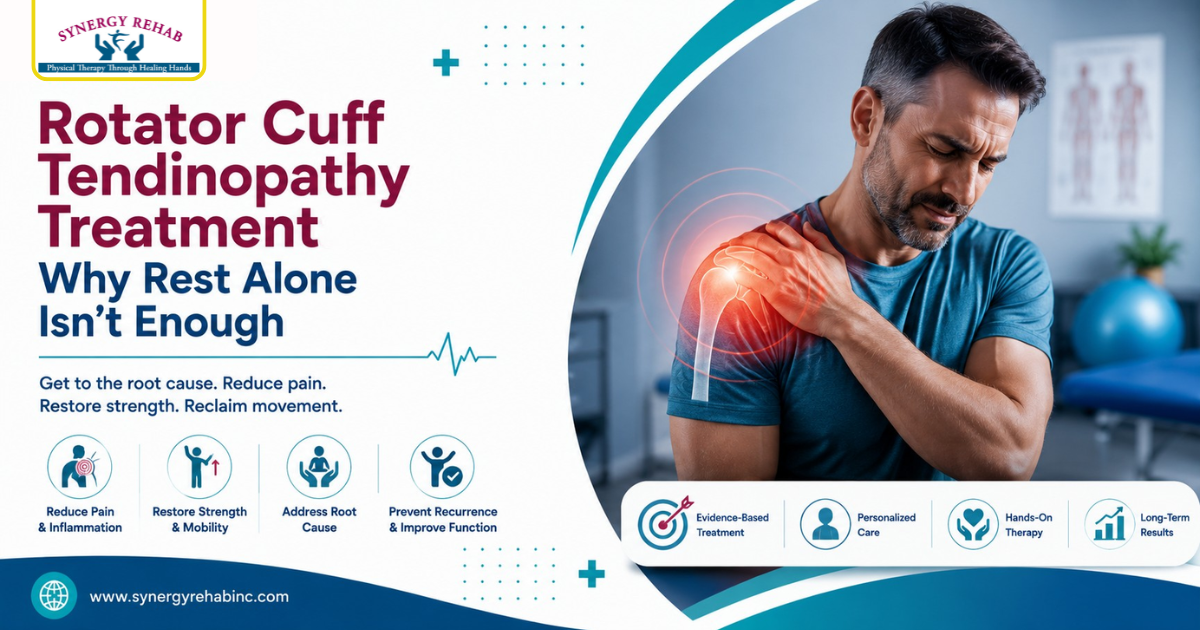
| Rotator cuff tendinopathy treatment works best when it goes beyond rest. Tendons grow stronger and less painful with gradual, progressive loading, so exercise-based rehab is the core. Rest alone lets the tendon weaken and the pain return. Most people recover without surgery through a paced, active plan. |
You Rested It, and the Pain Came Back
Here is a story we hear all the time. Your shoulder started aching, so you sensibly rested it. For a while it felt better. Then you went back to normal life and the pain returned, sometimes worse. That pattern is the clue. For an irritated shoulder tendon, rest calms things briefly but does not rebuild the tendon, and rebuilding is exactly what recovery needs.
What Is Rotator Cuff Tendinopathy?
Rotator cuff tendinopathy is an irritated, overloaded tendon in the shoulder. It is not a simple case of inflammation to wait out. The tendon has been asked to do more than it could tolerate, and its structure has changed. That is why treatment aimed only at calming inflammation often disappoints. The tendon needs a reason, and a plan, to get stronger.
Why Rest Alone Isn’t Enough
| Expert Insight: Load Is the Medicine. Clinical guidance for tendinopathy points to progressive loading as the core of care, because tendons adapt and strengthen when challenged in the right dose. Prolonged rest lets them weaken. Effective rehabilitation is active, not passive. Sources: Journal of Orthopaedic and Sports Physical Therapy; American Physical Therapy Association. |
Rest has a role at the very start, easing an angry tendon for a few days. Beyond that, it works against you. Muscles weaken, the shoulder stiffens, and the tendon loses the capacity you are trying to restore. The tendon does not need to be protected into weakness. It needs to be rebuilt.
What Effective Rotator Cuff Tendinopathy Treatment Looks Like

Good rotator cuff tendinopathy treatment moves through stages. First we calm the most irritable symptoms, often with gentle isometric holds that ease pain. Then we build strength gradually, adding resistance as the tendon tolerates it. Alongside the tendon itself, effective rehabilitation addresses the shoulder blade, posture, and the way you load the arm each day. Sound shoulder tendon pain treatment is active and specific, and it is paced to how you respond.
| Rest-Only Approach | Active Loading Approach |
|---|---|
| Pain eases briefly, then returns | Pain settles as strength builds |
| Tendon and muscles weaken | Tendon adapts and gets stronger |
| Shoulder stiffens | Movement and confidence return |
Non-Surgical Rotator Cuff Treatment: What to Expect
Most people with tendinopathy get better without an operation. This is a process, not a quick fix. Expect a gradual climb, with good days and the occasional flare, over several weeks to a few months. The trend matters more than any single day. Steady, well-dosed work is what turns a painful, guarded shoulder back into a strong and usable one.
Shoulder Pain Physical Therapy in Southfield
You can start without a referral. With shoulder pain physical therapy in Southfield, we assess the tendon, set the right starting load, and progress you safely. We also coach the daily habits that either help or hinder healing. For the full picture on causes, diagnosis, and recovery, see our complete guide to rotator cuff disorders.
Rebuild Your Shoulder the Right Way

If rest has not fixed your shoulder, a loading plan probably will. Book a shoulder assessment with Synergy Rehab, and we will find the right starting point and guide you back to strength.
Call (248) 298-0433 or visit synergyrehabinc.com. Find us at Farmbrook Medical Building 2, 29877 Telegraph Rd, Suite 303, Southfield, MI, open Monday to Friday. No referral is needed in Michigan.
FAQs About Rotator Cuff Tendinopathy Treatment
Q1. Why Isn’t Rest Fixing My Shoulder Tendon?
Rest calms an irritated tendon briefly, but it does not rebuild it. Tendons need gradual loading to regain strength and tolerance. Without that, they weaken and the pain returns when you resume activity, which is why active rehab, not rest alone, is the core of recovery.
Q2. What Is the Best Treatment for Rotator Cuff Tendinopathy?
The best rotator cuff pain treatment is progressive, exercise-based rehabilitation. It starts by calming symptoms, then loads the tendon in gradually increasing doses so it strengthens. Addressing posture and the shoulder blade supports the tendon, and most people improve without surgery.
Q3. How Long Does Recovery Take?
Recovery is gradual and individual. Many people feel meaningful change over several weeks to a few months of consistent rotator cuff rehabilitation, with full strength taking longer. Flare-ups happen and do not mean failure. The overall trend, driven by steady loading, is what counts.
Q4. Are Steroid Injections a Fix?
Injections can reduce pain for a time, but they do not rebuild the tendon. On their own they rarely provide lasting results. Used selectively, they may create a calmer window to begin loading. The durable fix is active shoulder tendon pain treatment, not injections alone.
Q5. Can Tendinopathy Heal Without Surgery?
Yes. Most tendinopathy improves with non-surgical rotator cuff treatment built on progressive loading. Surgery is uncommon for tendinopathy and is considered only in specific cases, such as a significant tear or when quality rehab has not helped over a reasonable time.
Q6. When Should I See a Physical Therapist?
See a physical therapist if shoulder pain lasts more than a couple of weeks, keeps returning, or limits your activity. In Michigan you can book directly, without a referral, to get the right diagnosis and a loading plan matched to your shoulder.