The Short Answer
| Rotator cuff tendinitis is an irritated, inflamed tendon, while a rotator cuff tear is actual damage through the tendon fibers. Tendinitis often comes first and can progress toward a tear. Both usually respond to non-surgical care, and a clinical exam, not just a scan, tells them apart. |
Two Words That Sound Alike but Aren’t
Tendinitis and a tear can produce a similar-sounding shoulder: sore, weak, worse overhead. No wonder the terms get tangled. Understanding rotator cuff tear vs tendinitis helps you know what you are dealing with and what to expect. The short version is that one is an irritated tendon and the other is a tendon that has actually torn, and they sit on the same spectrum.
What Is Rotator Cuff Tendinitis?
Rotator cuff tendinitis, sometimes called shoulder tendonitis, is an irritated and inflamed tendon. It usually builds from overuse or repetitive overhead activity. The tendon is intact but unhappy, producing pain with reaching, lifting, and often at night. Caught early, tendinitis tends to respond well to activity changes and progressive strengthening.
What Is a Rotator Cuff Tear?
A tear means the tendon fibers are actually damaged, either partially or all the way through. Tears can develop slowly with age, or suddenly from a fall or a hard pull. Larger tears may cause noticeable weakness. Persistent, untreated tendinitis can, over time, contribute to a tear, which is why the two are connected rather than separate.
Rotator Cuff Tear vs Tendinitis: The Key Differences
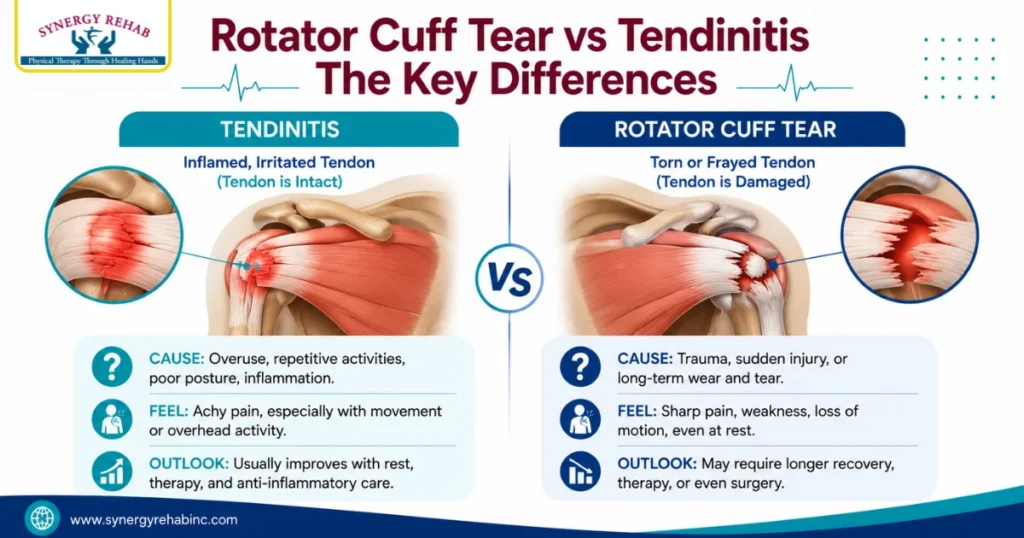
The table lays the two side by side. Remember that they overlap, and many shoulders show a bit of both.
| Feature | Tendinitis | Tear |
|---|---|---|
| What It Is | An irritated, intact tendon | Damage through the tendon fibers |
| Common Cause | Overuse, repetitive overhead activity | Age, wear, or a specific injury |
| Weakness | Usually mild | Can be significant with larger tears |
| First-Line Care | Activity changes and strengthening | Progressive loading, surgery in select cases |
| Expert Insight: The Label Is Not the Whole Story. Whether it is tendinitis or a tear, what guides care is how your shoulder moves, how strong it is, and what you need to do. A scan alone can mislead, since tears appear in pain-free shoulders too. Sources: American Academy of Orthopaedic Surgeons; Journal of Orthopaedic and Sports Physical Therapy. |
How Each Is Treated
Here is the reassuring part. For both, the first-line plan looks similar. Rotator cuff treatment starts by calming the irritated tissue, then rebuilds strength with progressive loading, restores smooth movement, and adjusts daily habits. Effective shoulder rehabilitation and hands-on physical therapy for shoulder pain form the backbone. Most people, whether they have tendinitis or a manageable tear, do well with non-surgical rotator cuff treatment. Surgery is reserved for larger tears or when quality rehab has not delivered enough progress.
How Physical Therapy Helps
You do not need a scan or a referral to get answers. Our Southfield team can examine your shoulder, tell tendinitis and a tear apart, and build a plan around your goals. In Michigan you can book directly. For the full picture on causes, diagnosis, and recovery, see our complete guide to rotator cuff disorders.
Find Out What You’re Dealing With

Not sure whether it is tendinitis or a tear? You do not have to guess. Book a shoulder assessment with Synergy Rehab, and we will tell you what is going on and how to treat it.
Call (248) 298-0433 or visit synergyrehabinc.com. Find us at Farmbrook Medical Building 2, 29877 Telegraph Rd, Suite 303, Southfield, MI, open Monday to Friday. No referral is needed in Michigan.
FAQs About Rotator Cuff Tear vs Tendinitis
Q1. What Is the Difference Between Tendinitis and a Tear?
Tendinitis is an irritated but intact tendon, usually from overuse. A tear is actual damage through the tendon fibers, from age or injury. They sit on the same spectrum, and untreated tendinitis can contribute to a tear over time.
Q2. Is Shoulder Tendonitis the Same as Tendinitis?
Yes. Shoulder tendonitis and tendinitis are two spellings of the same thing: an irritated, inflamed tendon. Some clinicians prefer tendinopathy, which describes tendon irritation without assuming active inflammation. All refer to a tendon that is overworked rather than torn.
Q3. Can Tendinitis Turn Into a Tear?
It can contribute. A tendon that stays irritated and overloaded may weaken over time, which can make a tear more likely, especially with age. Treating rotator cuff tendinitis early, with rest tweaks and strengthening, is one way to protect the tendon.
Q4. How Do You Tell Them Apart?
Mainly through a clinical exam, not a scan alone. A therapist checks movement, strength, and which positions reproduce your pain. Imaging is used selectively, since tears appear in pain-free shoulders too. The exam, not the label, guides your care.
Q5. Do Both Need Surgery?
Usually not. Most tendinitis and many tears respond to non-surgical rotator cuff treatment built on progressive loading and shoulder rehabilitation. Surgery is reserved for larger tears, significant weakness, or when a quality course of rehab has not delivered enough progress over a reasonable time.
Q6. Can Physical Therapy Treat Both?
Yes. Physical therapy for shoulder pain is first-line for both tendinitis and most tears. It calms the irritated tissue, rebuilds strength, and restores movement. In Michigan you can see a physical therapist directly, without a referral, to get started.