
Does your back ache after you have been on your feet for a while? Lower back pain when standing is a common problem, and it usually comes down to posture, muscle fatigue, or the way your spine carries weight. For most people, back pain while standing is mild and improves with a few simple changes. This guide covers the six most common causes and how to treat each one.
Why Does Standing Cause Back Pain?
When you stand for a long time, your lower back muscles work non-stop to hold you upright. Over time they tire, and your posture often slips, which adds pressure to the spine. That is why lower back pain after standing too long is so common. The good news is that the cause is usually something you can fix.
6 Common Causes of Lower Back Pain When Standing
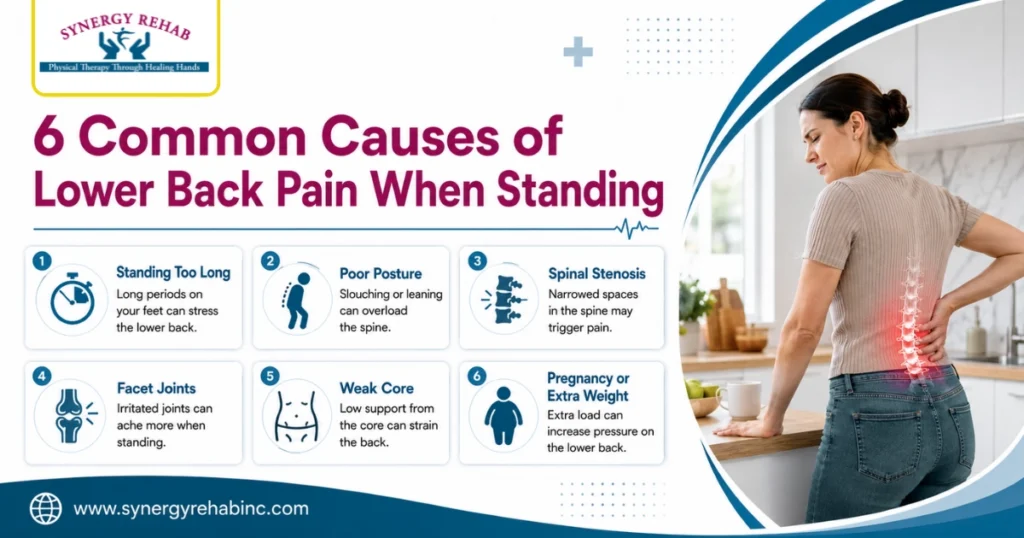
Here are the six most common reasons standing makes your back hurt.
- 1. Standing too long. The muscles that hold you upright get tired and start to ache. This is the most common reason for back pain after a long shift on your feet.
- 2. Poor posture. Slouching, or arching your back too much into a swayback, puts extra strain on the lower spine.
- 3. Spinal stenosis. When the space around the spinal nerves narrows, standing and walking can bring on pain that eases when you sit or lean forward.
- 4. Facet joint irritation. The small joints at the back of your spine take on more load when you stand, which can lead to lumbar spine discomfort.
- 5. Weak core. When your stomach and back muscles are weak, your spine gets less support, so standing feels harder on your back.
- 6. Pregnancy or extra weight. Added weight at the front of your body shifts your posture forward and increases the strain on your lower back.
How to Treat and Prevent It
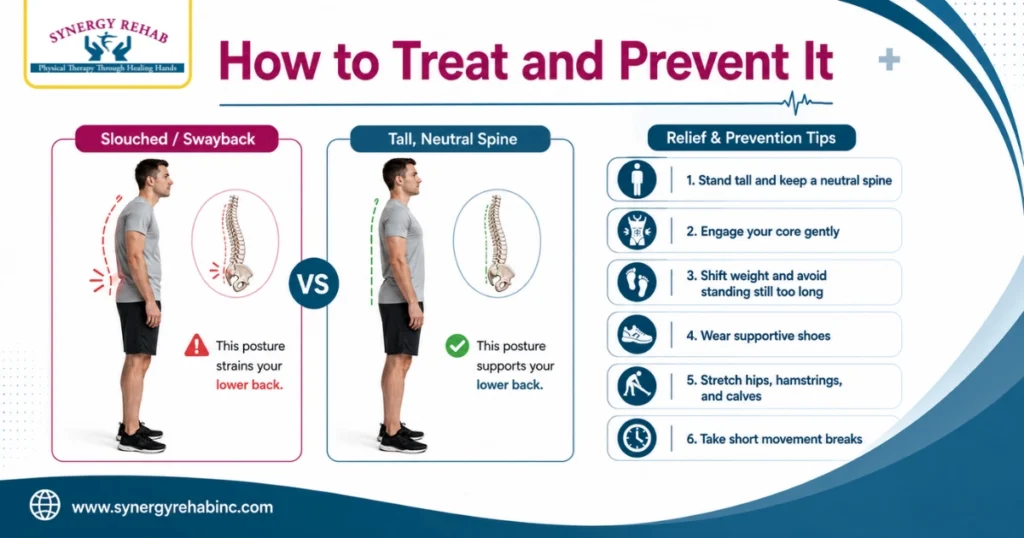
The right lower back pain treatment depends on the cause, but these simple steps help most people feel better.
- Shift your weight often. Move your feet, take short breaks, or rest one foot on a low step.
- Stand on a softer surface. An anti-fatigue mat reduces pressure when you stand for long periods.
- Fix your posture. Keep your shoulders back, tuck your chin, and avoid arching your lower back.
- Stretch and strengthen. Loosen tight hips and build a strong core to support your spine.
- Wear supportive shoes. Good footwear absorbs shock and eases the strain on your lower back.
- Use heat or ice. Heat relaxes tired muscles, and ice calms swelling after a long day.
If these steps do not help after a week or two, a professional treatment plan can target the exact cause and speed up your recovery.
When Should You See a Doctor?
Most standing-related back pain eases with rest and better habits. But see a professional if you notice any of these signs.
- Pain that spreads down one or both legs
- Numbness, tingling, or weakness in the legs or feet
- Pain that does not improve after two weeks
- Pain that wakes you at night
- Trouble controlling your bladder or bowels, which needs urgent care
How Physical Therapy Can Help
If standing pain keeps coming back, physical therapy for lower back pain is one of the best ways to fix it for good. A therapist checks your posture, core strength, and movement to find the true cause of your back pain from standing. At Synergy Rehab, this hands-on care includes posture training and targeted exercises, so you can stand, work, and move without pain.
Stand Tall and Pain-Free
You do not have to live with lower back pain when standing. Synergy Rehab offers expert physical therapy for lower back pain in Southfield, MI, led by Tapan Raut, PT, with more than 30 years of experience. Call (248) 298-0433 to book your appointment today.
FAQs About Back Pain When Standing
Q1. Why does my lower back hurt when I stand but feel better when I sit?
This often points to spinal stenosis or a posture problem. Standing can narrow the space around the nerves or arch the lower spine, while sitting opens it up and relieves the pressure.
Q2. How long is too long to stand?
There is no fixed limit, but pain after standing for 30 minutes or more may mean your posture or core needs work. Short breaks and shifting your weight help a lot.
Q3. What is the best treatment for lower back pain when standing?
The best lower back pain treatment depends on the cause. For most people, better posture, a stronger core, and physical therapy give lasting relief.
Q4. Can standing all day cause lumbar spine discomfort?
Yes. Standing all day tires the muscles and loads the joints, which can leave your lower back stiff and sore. Regular breaks, supportive shoes, and core exercises reduce the strain.