

Most people assume back pain comes from a slipped disc or pulled muscle. But what if the real problem lies in tiny joints in your spine that almost nobody talks about?
Every day in the clinic, patients walk in with stiffness that seems to appear out of nowhere. They struggle to twist their torso, turning their neck feels restricted, and standing upright becomes uncomfortable. Many have tried stretching, pain creams, or rest with little success.
Quite often, the hidden culprit turns out to be facet joint syndrome, a condition that affects the small stabilizing joints in the spine. These joints guide how the spine bends and rotates. When they become irritated or worn down, even simple movements can trigger persistent discomfort.
The Overlooked Joints That Keep Your Spine Moving
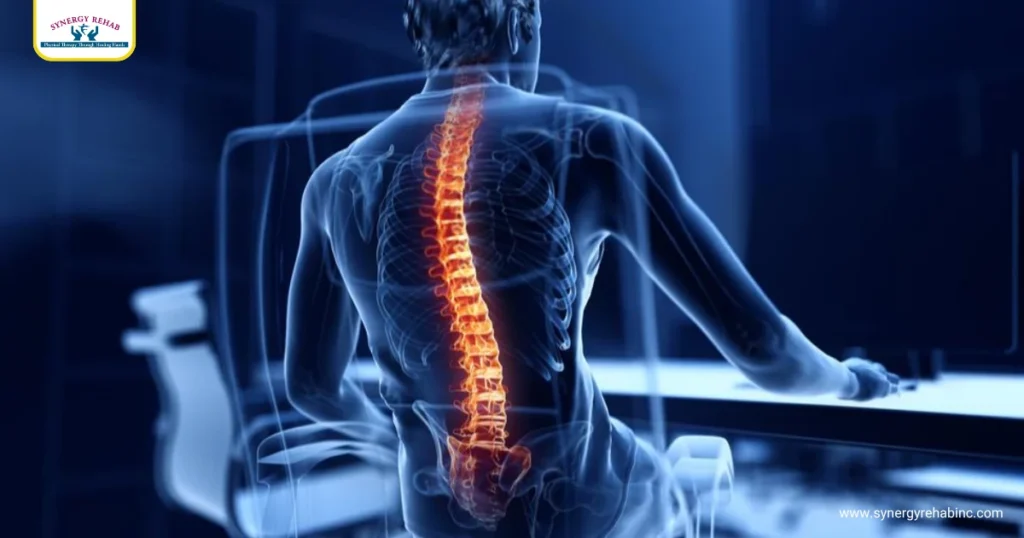
Your spine is made up of vertebrae stacked like building blocks. Between these bones sit small joints called facet joints. Each spinal segment has two of them, one on the left and one on the right.
Think of them as guiding hinges for the spine. They allow the body to bend, twist, and extend while also preventing excessive movement that could injure the spinal cord.
These joints are lined with cartilage and surrounded by a capsule filled with fluid, similar to the knee or shoulder. When healthy, they glide smoothly as you move.
Problems begin when the cartilage wears down or the joint becomes inflamed. At that point, the once smooth motion of the joint becomes painful. This is when facet joint syndrome can develop, creating stiffness, irritation, and reduced mobility.
Why Facet Joint Problems Often Go Undiagnosed
Back pain has many potential causes, which makes diagnosis complicated. Muscles, discs, nerves, and joints can all produce similar symptoms.
As a result, facet joint syndrome may be mistaken for muscle strain or disc-related pain. However, the pain pattern tends to be slightly different.
Patients with this condition often report stiffness when leaning backwards or twisting their spine. They may feel relief when bending forward or sitting down.
6 Common Causes and Risk Factors of Facet Joint Syndrome
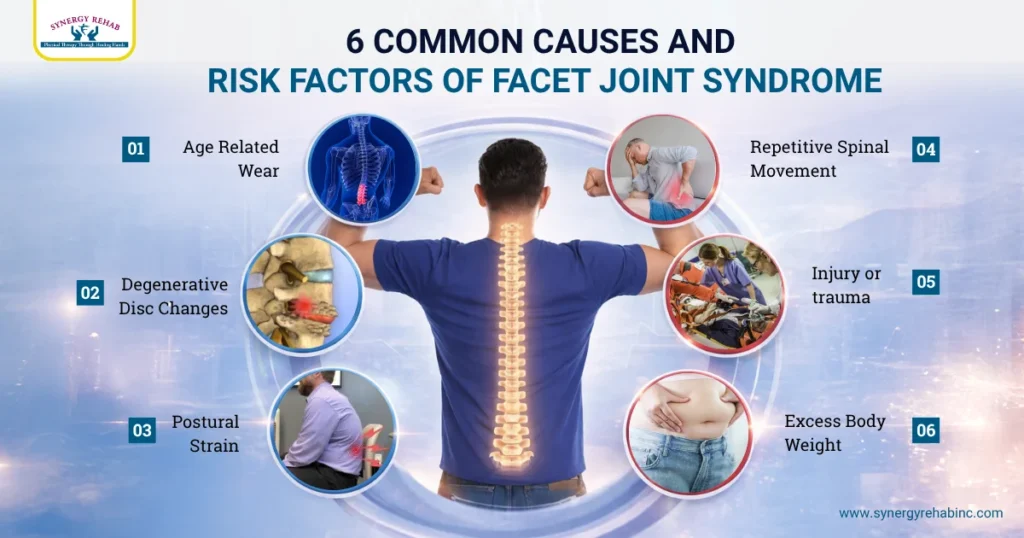
Spinal joints are built to withstand movement and pressure, but over time, certain stresses can irritate them. Understanding these factors can help people protect their spine and reduce future flare-ups.
Below are the most common contributors to joint degeneration.
Together, these factors create an environment where facet joint syndrome can gradually develop.
1. Age-Related Wear
As cartilage gradually thins, the joint surfaces lose their smooth cushioning. This degenerative process often leads to facet joint arthritis, a condition in which the joints become inflamed and stiff.
2. Degenerative Disc Changes
When spinal discs lose height, the facet joints absorb additional pressure. Over time, this mechanical overload can contribute to facet joint disease.
3. Postural Strain
Long hours at a desk or looking down at devices place uneven pressure on spinal joints, increasing irritation.
4. Repetitive Spinal Movement
Jobs that involve twisting, bending, or lifting frequently may accelerate joint degeneration.
5. Injury or trauma
Accidents, falls, and sports injuries can damage joint cartilage or surrounding tissues.
6. Excess Body Weight
Extra weight increases the mechanical load on the lower spine, which may worsen joint stress.
How the Condition Progresses Inside the Spine
The cartilage that normally cushions the bones becomes thinner and more irregular. Friction increases between the joint surfaces, which triggers inflammation.
In many patients, chronic inflammation in these spinal joints eventually develops into facet joint arthritis, which can further limit mobility and increase discomfort.
The body attempts to stabilize the area by forming bone spurs. These small bony growths can irritate nearby tissues and restrict movement.
Meanwhile, nerves surrounding the joint send pain signals to the brain. Nearby muscles tighten to protect the area, which can lead to additional stiffness.
Over time, these combined changes produce persistent facet joint pain, especially during certain movements such as standing upright or twisting.
Symptoms That Suggest Facet Joint Involvement
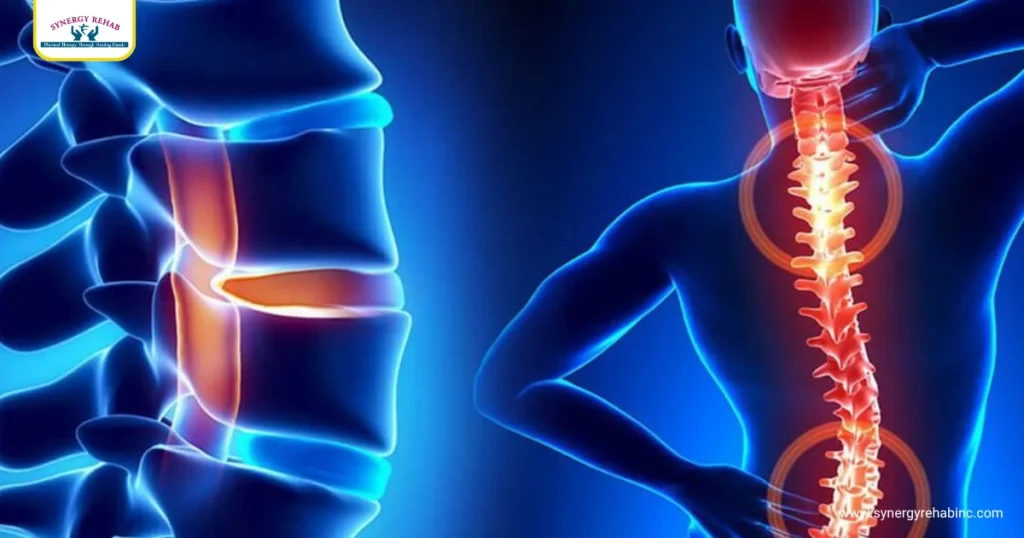
The symptoms of spinal joint problems vary depending on where the affected joints are located.
Before listing specific signs, it is important to remember that pain patterns provide important clues. Patients often notice that discomfort changes depending on posture or movement.
Common symptoms include
Lower Back Involvement
- Dull aching in the lower back
- Discomfort spreading toward the hips or buttocks
- Stiffness when standing after sitting
- Pain during back extension
- Reduced flexibility while twisting
These symptoms often occur when the lumbar joints become irritated, leading to facet joint pain that can interfere with daily activities.
Neck Involvement
- Neck stiffness and reduced rotation
- Pain near the base of the skull
- Headaches originating from the neck
- Shoulder or upper back discomfort
These patterns frequently appear when facet joint syndrome affects the cervical spine.
Recognizing these symptoms early allows patients to seek treatment before mobility declines further.
How Doctors Confirm the Diagnosis
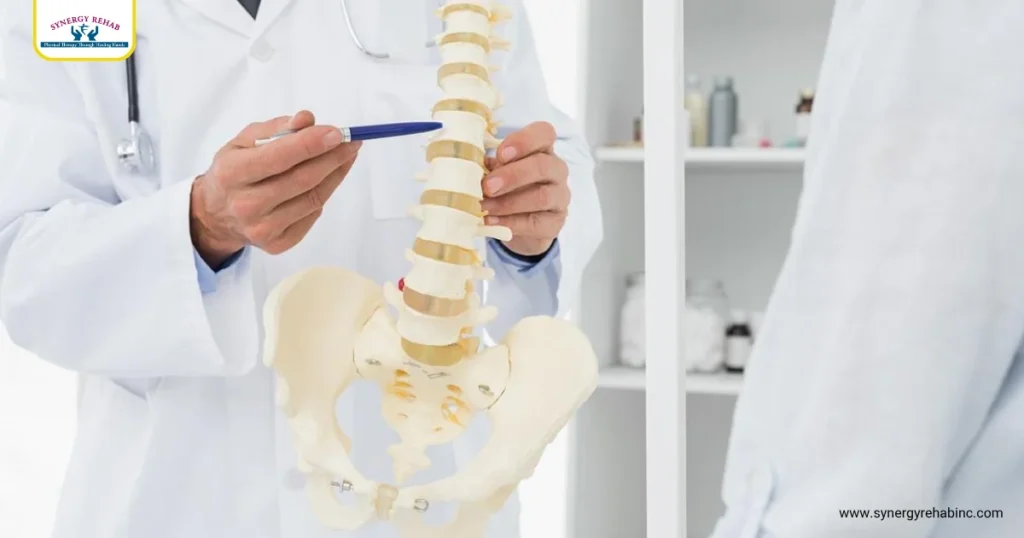
Identifying the true source of spinal pain requires careful evaluation.
Clinicians begin with a detailed medical history and physical examination. They assess movement patterns, posture, and muscle tension.
Imaging tests such as X rays or MRI scans may reveal degenerative changes linked to facet joint disease. However, imaging alone cannot always confirm the pain source.
For that reason, physicians sometimes perform a diagnostic procedure called a medial branch block. During this test, a small amount of anesthetic is injected near the nerve supplying the joint.
If the pain disappears temporarily, it confirms that facet joint syndrome is responsible for the symptoms.
4 Treatment Options That Restore Comfort and Mobility for People with Facet Joint Syndrome
Managing spinal pain requires a thoughtful strategy that focuses on both relief and long term function.
Treatment usually begins conservatively before progressing to more advanced interventions.
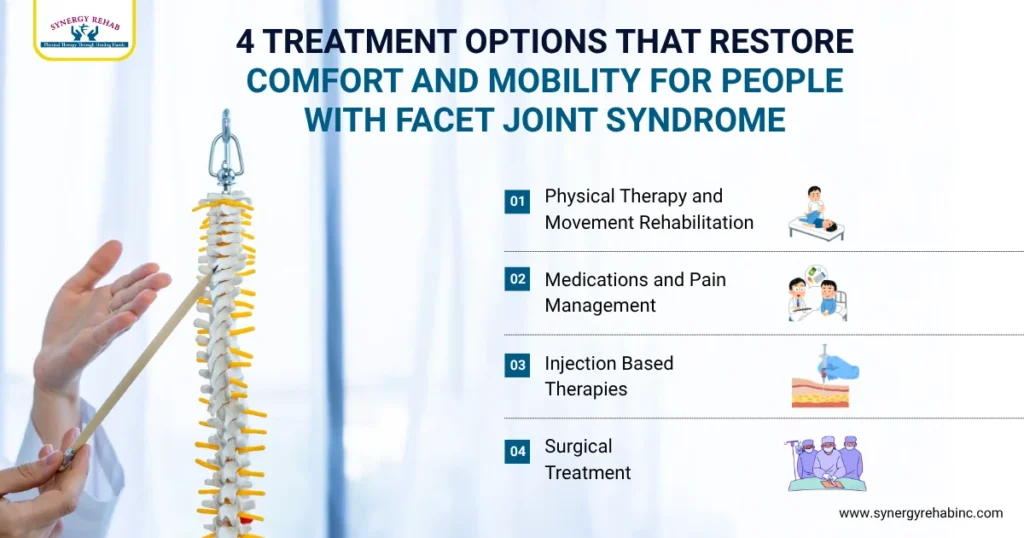
1. Physical Therapy and Movement Rehabilitation
Movement is one of the most powerful tools for managing spinal joint problems. Carefully guided physical therapy for back pain helps restore strength, flexibility, and control in the spine.
A physical therapist may design a program that includes
- Core stabilization exercises
- Hip and hamstring flexibility work
- Posture correction strategies
- Gentle spinal mobility drills
- Functional strengthening exercises
These exercises reduce stress on irritated joints and help patients regain confidence in movement.
Consistent participation in physical therapy for back pain can dramatically improve spinal stability and decrease flare ups.
2. Medications and Pain Management
Doctors may recommend anti-inflammatory medications or muscle relaxants to reduce irritation and muscle spasms.
These options help control symptoms while the body responds to rehabilitation.
3. Injection Based Therapies
If conservative care does not provide enough relief, targeted injections may be considered.
Facet joint steroid injections reduce inflammation directly inside the joint. For longer lasting relief, radiofrequency ablation may be used to disrupt pain signals from the joint’s nerve supply.
These interventions often help patients participate more comfortably in rehabilitation.
4. Surgical Treatment
Surgery is rarely necessary. It is typically reserved for severe spinal instability or nerve compression that does not respond to other treatments.
Most patients improve significantly with non surgical care.
Daily Habits That Protect Your Spine
Living with spinal pain can feel discouraging, but small changes in daily habits often make a meaningful difference.
Regular exercise improves blood flow and joint nutrition. Strengthening the core muscles provides support for the spine.
Maintaining a healthy body weight reduces pressure on spinal structures. Ergonomic workstations help prevent prolonged stress on the neck and back.
These habits do not reverse structural degeneration, but they slow progression and support recovery from facet joint syndrome.
A Therapist’s Perspective, Why Early Action Matters

Many people believe that resting their back completely will help it heal. In reality, prolonged inactivity can worsen stiffness and weaken supportive muscles.
The spine thrives on controlled movement. Gentle exercise stimulates circulation, nourishes joint tissues, and improves flexibility.
Another common mistake is ignoring posture during everyday activities. Simple adjustments such as sitting upright, using ergonomic chairs, and strengthening the core can significantly reduce joint stress.
These small changes play a powerful role in managing facet joint syndrome and preventing recurrent flare ups.
Start Physical Therapy For Facet Joint Syndrome with Synergy Rehab

Persistent spinal discomfort should never be ignored, especially when it interferes with work, sleep, or daily movement.
At Synergy Rehab, a leading physical therapy clinic in Southfield, Michigan, our therapists specialize in identifying the true causes of spinal pain and creating personalized treatment plans.
If you are experiencing symptoms related to facet joint syndrome, our team can help you restore mobility, reduce inflammation, and return to the activities you enjoy.
Schedule a consultation with Synergy Rehab today and take the first step toward lasting spinal health.
FAQs About Facet Joint Syndrome
1. Can facet joint problems cause stiffness without severe pain?
Yes. In early stages, spinal joints may create stiffness and reduced mobility rather than strong pain signals. Many patients first notice difficulty twisting or extending their back.
2. Are spinal joint conditions more common in certain professions?
Jobs involving prolonged sitting, heavy lifting, or repetitive bending can increase stress on spinal joints, which may contribute to degeneration over time.
3. Does sleeping position affect spinal joint irritation?
Yes. Poor sleeping posture can place uneven stress on spinal joints. Using supportive pillows and maintaining neutral spine alignment can help reduce morning stiffness.
4. Can strengthening the core reduce future back problems?
Strong abdominal and back muscles stabilize the spine and reduce pressure on joints. This support can help decrease the likelihood of recurrent spinal pain.
5. Is it possible to stay active with spinal joint degeneration?
Absolutely. With proper exercise guidance and posture awareness, most individuals remain active and manage symptoms successfully.