


Knee Malalignment: What It Is and How Physical Therapy Can Fix It
Ever feel like your knees are out of sync when you walk, climb stairs, or even stand still? You’re not imagining it. The issue might not be your shoes, age, or weight — it could be something deeper: Knee Malalignment. This subtle but serious condition can quietly wreak havoc on your joints, mobility, and lifestyle. Let’s break down what Knee Malalignment really is, how to recognize it, and how physical therapy for knee pain could be the best fix, no surgery required. What Is Knee Malalignment? Think of your knee joint as a hinge. For optimal function, it needs to be perfectly aligned — vertically stacked bones, balanced muscle forces, and smooth motion. When this balance is disrupted, Knee Malalignment occurs. This condition means your knee joint is no longer tracking correctly when you move, putting abnormal stress on ligaments, cartilage, and surrounding structures. Causes vary: genetics, past injuries, muscular imbalances, or years of poor posture. Over time, this misalignment leads to pain, inflammation, instability, and even early-onset arthritis. 5 Types of Knee Malalignment You Should Know Not all misalignments are created equal. To effectively treat Knee Malalignment, it’s essential to understand the specific type you’re facing. Each variation affects the knee joint differently and requires a tailored approach in your knee alignment correction plan. 1. Genu Valgum (Knock Knees) This condition causes the knees to angle inward and touch each other when the legs are straight. Often noticeable in children, it can persist into adulthood if left uncorrected. Genu valgum shifts stress to the outer (lateral) parts of the knee, increasing the risk of joint degeneration, instability, and discomfort during weight-bearing activities. 2. Genu Varum (Bow Legs) In contrast, genu varum creates a noticeable gap between the knees even when the ankles are together. This outward curvature places excess pressure on the inner (medial) portion of the knee joint. If unaddressed, it can lead to uneven cartilage wear, poor balance, and chronic joint pain, especially with age. 3. Patellar Tracking Disorder Here, the kneecap (patella) fails to glide smoothly in its groove during knee movement. Instead, it may shift too far to one side — usually outward — causing pain, a grinding sensation, or even dislocation. This is a common issue among athletes and active individuals, often due to muscular imbalances or improper movement mechanics. 4. Functional Malalignment This type of Knee Malalignment isn’t due to structural issues in the bones but rather poor neuromuscular control. It typically stems from weak glutes, tight hip flexors, flat feet, or repetitive improper movements. The good news? Functional malalignment responds very well to physical therapy and strength training. 5. Structural Malalignment Unlike functional issues, structural malalignment involves actual anatomical differences in the bones. This could be from congenital abnormalities or post-traumatic changes (like improperly healed fractures). While it can be more complex to treat, physical therapy still plays a crucial role in improving mechanics and minimizing joint stress. Recognizing which type of misalignment you’re experiencing is the first step toward a customized, effective knee alignment correction plan — and a life with less pain and better movement. How Do You Know If Your Knees Are Misaligned? Ever feel like your knees are working against you instead of with you? Maybe you’ve noticed discomfort while walking, or your knees just look a little off. The truth is — your body often whispers before it screams. Catching the signs of Knee Malalignment early can save you from years of pain, joint damage, or unnecessary surgery. This knowledge empowers you to take control of your knee health and be proactive in seeking treatment. So, how can you tell if your knees are out of alignment? Tune in to the warning signs your body might already be sending. Common symptoms include: If you recognize any of these red flags, it’s time to consider knee misalignment treatment. The earlier you address the root cause, the better your chances of avoiding long-term joint damage and chronic pain. What Causes Knee Malalignment? You don’t have to be an athlete or have an accident to suffer from Knee Malalignment. In fact, most people don’t realize it’s creeping in slowly due to: All of these can contribute to a need for knee alignment correction, which is where physical therapy steps in. Why Physical Therapy Is the Game-Changer for Knee Malalignment The best part about Knee Malalignment? It often doesn’t require surgery. Physical therapy offers a safe, effective, and lasting solution by targeting the root cause rather than just the symptoms. A skilled physical therapist evaluates how you move, your posture, gait, flexibility, and strength, to uncover what’s throwing your knees out of balance. They then design a personalized treatment plan that may include strengthening exercises for the muscles around the knee, flexibility exercises to improve range of motion, and corrective techniques to improve movement patterns. Through these targeted interventions, physical therapy for knee pain restores muscle strength, improves flexibility, and retrains your movement patterns. Instead of chasing short-term relief, therapy realigns your knees naturally and helps prevent future injuries. For most people, it’s the smartest, most sustainable way to fix misalignment and get back to pain-free movement. This should give you hope that relief is possible, even if you’ve been struggling with knee malalignment for a while. Is It Ever Too Late to Correct Knee Malalignment? No. Whether you’re a 25-year-old athlete or a 65-year-old retiree, knee misalignment treatment through physical therapy is safe, personalized, and effective. The body is incredibly adaptable — even more so when guided by expert movement specialists. What matters most is consistency and a willingness to follow through with your therapist’s plan. When to See a Physical Therapist in Southfield If your knee pain has lasted more than two weeks, worsens with activity, or causes changes in your walk, it’s time to take action. Physical therapy is ideal as a first step, not a last resort. At Synergy Rehab, we specialize in physical therapy for knee pain. Located in Southfield, Michigan, we’re known for our
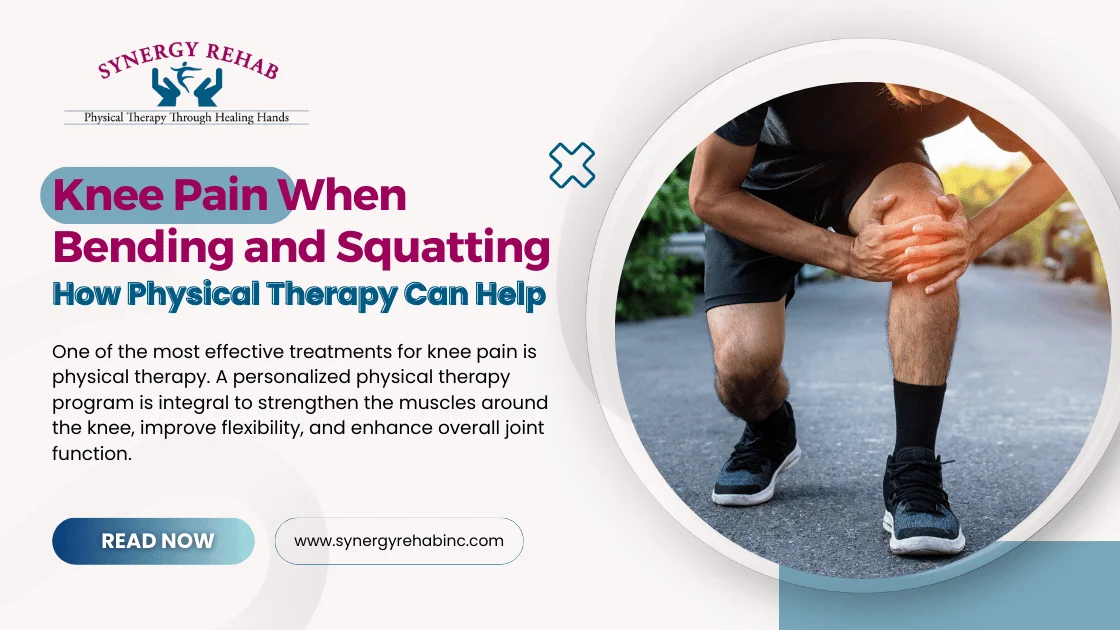
Knee Pain When Bending and Squatting: How Physical Therapy Can Help
Imagine trying to bend down to pick up a child or squat to grab something from a low shelf, only to be met with sharp, debilitating knee pain when bending. This all-too-common experience can turn simple daily tasks into daunting challenges. But there’s hope. If you understand the causes of knee pain and explore effective treatment options, such as physical therapy for knee pain, it can significantly improve quality of life. Why Knee Pain Occurs When Bending and Squatting Let’s understand first thing: the knee joint is a complex structure made up of of bones, cartilage, ligaments, and tendons. It is one of the largest and most stressed joints in the body, particularly during activities like bending and squatting. Knee pain when bending or squatting often results from various factors: Symptoms and Diagnosis Knee pain when bending or squatting may be accompanied by various symptoms, including: To devise an appropriate physical therapy treatment plan for knee pain, a physical therapist will examine the knees properly to understand the cause of knee pain. This includes assessing the patient’s medical history, performing a physical evaluation, and possibly recommending imaging tests such as X-rays or MRI scans. Knee Pain Treatment Options Treatment for knee pain when bending or squatting depends on the underlying cause. Common treatment options include: How Physical Therapy Can Help Physical therapy plays a crucial role in treating knee pain when bending or squatting. The primary goals of physical therapy for knee pain are to reduce pain, restore function, and prevent further injury. Here’s how physical therapy can help: Prevention Tips for Knee Pain When Bending Preventing knee pain involves maintaining a healthy lifestyle and adopting habits that protect the knee joint. Here are some tips to prevent knee pain: The Final Thoughts Knee pain when bending and squatting can significantly impact daily life, but effective treatment options are available. Physical therapy for knee pain offers a comprehensive approach to managing symptoms, improving function, and preventing further injury. By incorporating strengthening exercises, flexibility training, and pain management techniques, physical therapy can help individuals return to their daily activities pain-free. For expert care and personalized treatment plans, visit Synergy Rehab, a physical therapy clinic in Southfield, MI. Our experienced physical therapists are dedicated to helping you achieve optimal knee health and overall well-being. Experience the benefits of specialized physical therapy for knee pain at Synergy Rehab. Contact us today to schedule your appointment and take the first step toward a pain-free life. FAQs About Knee Pain When Bending and Squatting 1. Are there specific exercises I should avoid if I have knee pain when bending or squatting? Yes, exercises that place excessive stress on the knees, such as deep squats, lunges with heavy weights, and high-impact activities like running or jumping, should be avoided. Consult a physical therapist for tailored exercise recommendations. 2. Can diet affect knee pain when bending or squatting? Yes, a diet rich in anti-inflammatory foods like fruits, vegetables, and omega-3 fatty acids can help reduce inflammation and support joint health, potentially alleviating knee pain when squatting. 3. What role does footwear play in managing knee pain when bending or squatting? Wearing supportive and well-cushioned footwear can help absorb shock, provide stability, and reduce stress on the knee joint during daily activities and exercise. 4. How does weight impact knee pain when bending or squatting? Excess body weight increases the load on the knee joints, which can exacerbate pain and contribute to the development of conditions like osteoarthritis. Maintaining a healthy weight can alleviate pressure on the knees. 5. Are there any alternative therapies that can complement physical therapy for knee pain? Yes, alternative therapies such as acupuncture, chiropractic care, and yoga can complement physical therapy by providing additional pain relief and promoting overall joint health.