



The Short Answer
| Both are common twisting injuries, but they feel different. A meniscus tear often brings catching, locking, and pain along the joint line. An ACL injury frequently involves a pop, rapid swelling, and a knee that feels unstable. Many meniscus tears and some ACL injuries are managed with physical therapy, decided case by case. |
Two Common Injuries, Two Different Feelings
The meniscus and the ACL are both inside the knee, and both are often hurt by the same kind of twist or awkward landing. But they are different structures with different jobs, so the symptoms and options differ. Telling them apart early helps you make good decisions, and it starts with how the injury happened and what the knee did next. Sorting out a meniscus vs ACL tear early guides every decision that follows.
Meniscus Tear Symptoms
The meniscus is the knee’s cartilage cushion. Common meniscus tear symptoms include pain along the joint line, swelling that builds over a day or so, and a catching or locking feeling when you bend or twist. Many people can still walk, and the knee usually feels sore rather than unstable.
ACL Injury Symptoms
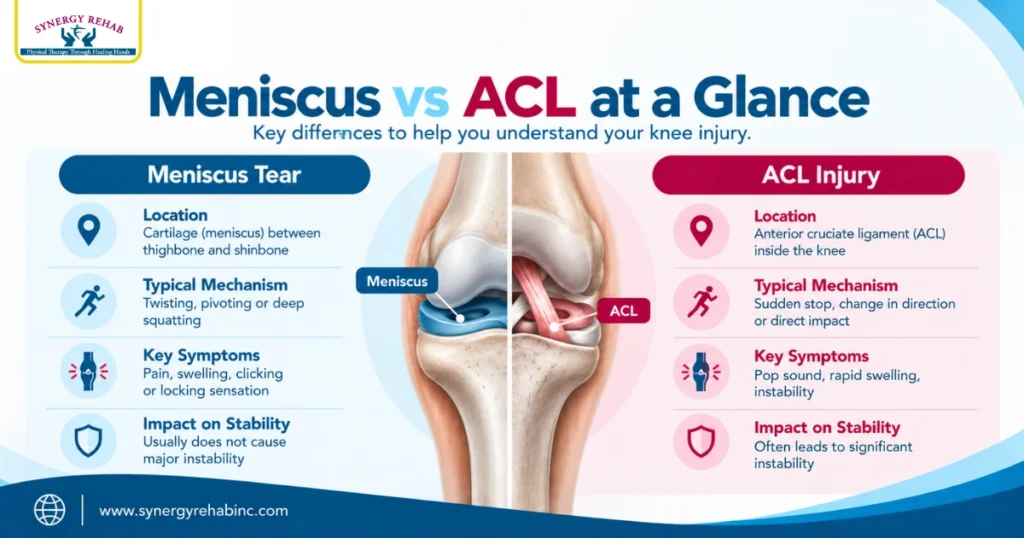
The ACL is a ligament that stabilizes the knee. Classic ACL injury symptoms include a loud pop at the moment of injury, rapid swelling within hours, and a knee that feels like it will give way, especially when changing direction. This is a knee ligament injury that affects stability more than a meniscus tear does.
The table below compares the two at a glance. It is a guide, not a diagnosis, which needs a hands-on exam.
| Feature | Meniscus Tear | ACL Injury |
|---|---|---|
| Structure | Cartilage cushion | Stabilizing ligament |
| At the Moment | Twist, often no pop | Loud pop is common |
| Swelling | Builds over a day | Rapid, within hours |
| Key Feeling | Catching or locking | Giving way, instability |
| Common Path | PT for many tears | PT, surgery for many active people |
| Expert Insight: Scans Confirm, the Exam Guides. A skilled hands-on exam is very informative for these sports knee injuries, and imaging confirms the details when needed. What matters most is your symptoms, your stability, and your goals. Sources: American Academy of Orthopaedic Surgeons; NIH NIAMS. |
Your Treatment Options
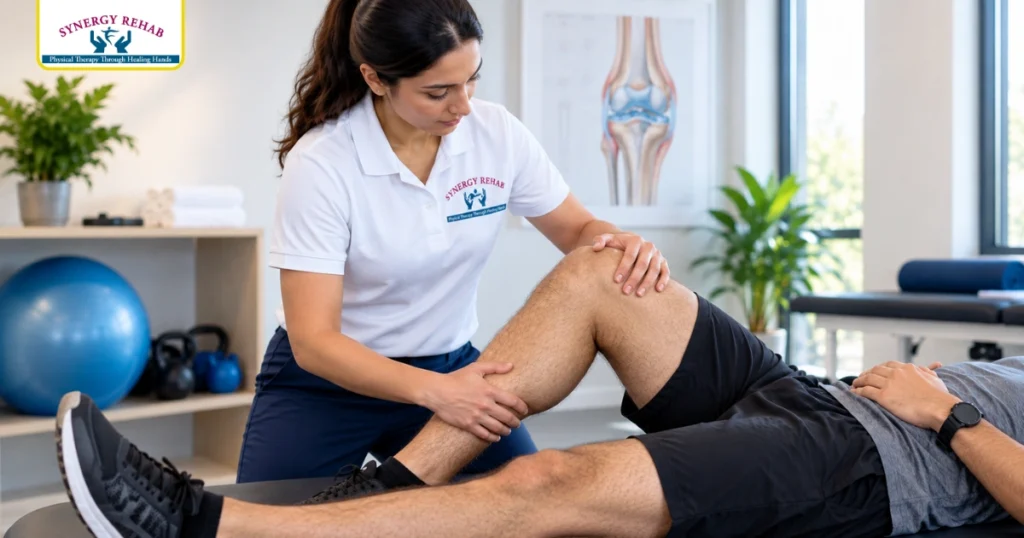
Many meniscus tears settle with physical therapy for meniscus tear problems, which calms the knee and rebuilds strength and control. ACL injuries are more individual. Some people, especially those returning to pivoting sports, choose reconstruction, while others succeed with structured rehab. Either way, knee trauma treatment in Southfield usually includes physical therapy, before surgery, instead of it, or after it. For many tears, physical therapy for meniscus tear problems is all that is needed.
How a Physical Therapist in Southfield Can Help
You do not need a referral to start. Our knee pain physical therapy in Southfield assesses stability, explains what is likely going on, and guides you toward the right path, whether that is rehab alone or coordinating with a surgeon.
Ready to Understand Your Knee Injury?
If you twisted your knee and are not sure how serious it is, an assessment gives you clear answers and a plan. Book a knee assessment with Synergy Rehab today.
Call (248) 298-0433, or visit synergyrehabinc.com. You will find us at Farmbrook Medical Building 2, 29877 Telegraph Rd, Suite 303, Southfield, MI, open Monday to Friday. No physician referral is needed to get started in Michigan.
FAQs About Meniscus and ACL Injuries
Q1. How Do I Know If It Is a Meniscus Tear or ACL Injury?
They feel different. A meniscus tear often brings catching or locking and joint-line pain, with swelling over a day. An ACL injury usually involves a pop, rapid swelling, and instability. A hands-on exam, and imaging if needed, confirms which it is.
Q2. What Are the Main Meniscus Tear Symptoms?
Pain along the joint line, swelling that builds over a day, and a catching or locking sensation when bending or twisting. Many people still walk but feel the knee is sore and unreliable in deep bends. Physical therapy helps many of these tears.
Q3. What Are the Main ACL Injury Symptoms?
A loud pop at the moment of injury, rapid swelling within hours, and a knee that feels like it gives way, especially on turns. Because the ACL controls stability, instability is the hallmark. Prompt assessment guides the right plan.
Q4. Can a Meniscus Tear Heal Without Surgery?
Many meniscus tears settle with physical therapy that calms the knee and rebuilds strength and control, avoiding surgery. Some tears, particularly those that lock the knee, may need a procedure. An assessment helps determine which path fits your tear.
Q5. Do All ACL Injuries Need Surgery?
No. Some people, especially those returning to pivoting sports, choose reconstruction, while others do well with structured rehabilitation. It depends on your stability, your goals, and your activities. Physical therapy is central either way, and the decision is made with your team.
Q6. Do I Need a Referral to Start Physical Therapy?
No. Michigan has direct access, so you can start knee pain physical therapy without a physician referral. You can book with us directly and begin your assessment right away. It is worth checking your insurance coverage before your first visit.