


The Short Answer
| The best exercises for knee pain at home strengthen the muscles that support the knee, especially the thighs and hips, and restore easy movement. Straight-leg raises, sit-to-stands, and glute bridges are gentle starting points. Build up slowly, stop if pain sharpens, and see a physical therapist if pain persists. |
Simple Moves That Make a Real Difference
You do not need a gym to help your knees. A handful of well-chosen home exercises for knee pain can ease discomfort, rebuild strength, and make daily activities easier. The goal is not to push into pain, but to load the knee gently and consistently. Below are seven physical therapy exercises we often start people with. Move slowly, breathe, and stop any move that sharpens your pain.
| Expert Insight: Consistency Beats Intensity. For knee pain, doing the right exercises a little most days works better than occasional hard sessions. Gentle, progressive loading is what rebuilds a comfortable, capable knee. Sources: Journal of Orthopaedic and Sports Physical Therapy. |
7 Exercises to Reduce Knee Pain at Home
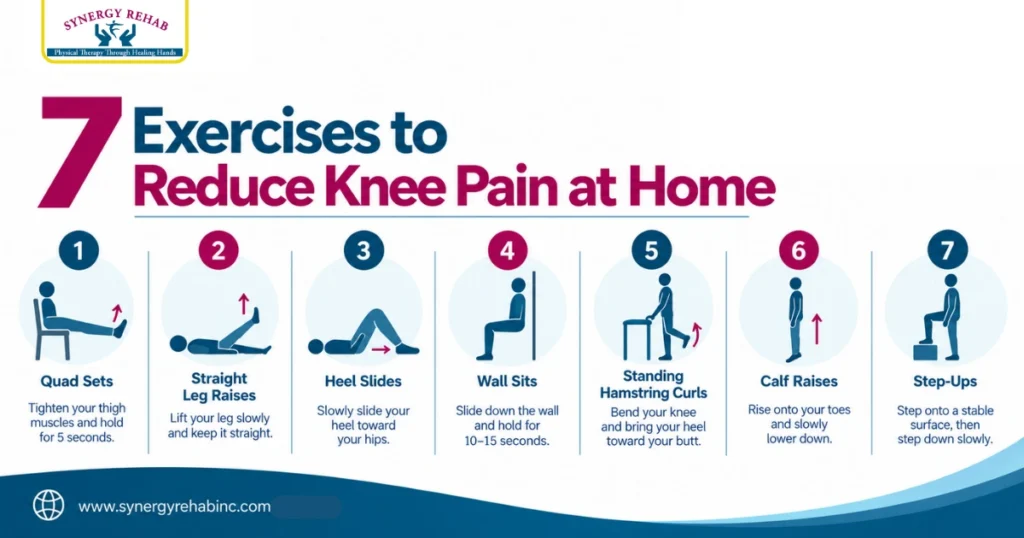
Start with what feels manageable, and build up over a couple of weeks. These knee strengthening exercises and mobility moves work together:
1. Straight-Leg Raise: lying down, lift a straight leg a few inches and lower slowly to build the thigh.
2. Quad Sets: press the back of the knee down, tightening the thigh, and hold briefly.
3. Sit-to-Stand: rise from a chair and sit back down with control, using hands only if needed.
4. Glute Bridge: on your back, knees bent, lift the hips to strengthen the muscles that support the knee.
5. Standing Hamstring Curl: bend one knee to bring the heel toward you, holding a chair for balance.
6. Step-Ups: step onto a low step and down with control to train stairs specifically.
7. Heel Raises: rise onto your toes and lower slowly to build the calves that help absorb load.
Add Gentle Mobility
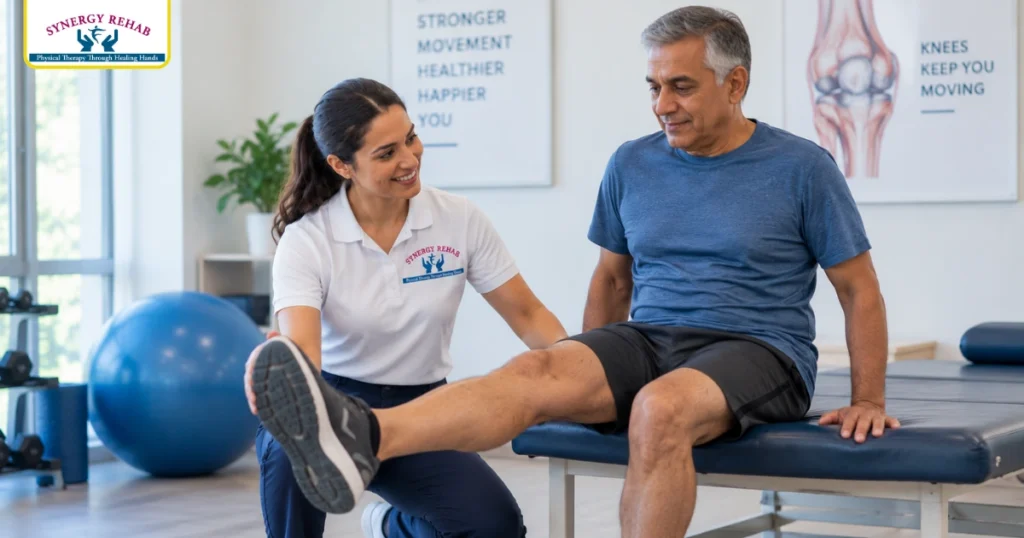
Alongside strength, a little movement keeps the joint supple. Simple knee mobility exercises, like slow, supported bends and straightens, are useful exercises for stiff knees, especially first thing in the morning or after long sitting. Aim for smooth, comfortable range rather than forcing it. Pairing these knee mobility exercises with strengthening works best.
Safety First
A little muscle effort is expected, but these moves should not cause sharp or lasting pain. If your knee is swollen, gives way, or the pain keeps returning, that is a sign to get it checked rather than push on. The right starting point and dose matter, which is exactly what a therapist personalizes.
How a Physical Therapist in Southfield Can Help
You do not need a referral to start. A physical therapist for knee pain in Southfield can tailor these moves to your knee, correct your form, and progress you safely. That personalized
Ready for a Plan Made for You?

Home exercises are a great start, and they work even better with a plan built for your knee. Book a knee assessment with Synergy Rehab today.
Call (248) 298-0433, or visit synergyrehabinc.com. You will find us at Farmbrook Medical Building 2, 29877 Telegraph Rd, Suite 303, Southfield, MI, open Monday to Friday. No physician referral is needed to get started in Michigan.
FAQs About Knee Exercises at Home
Q1. What Are the Best Exercises for Knee Pain at Home?
Gentle strengthening for the thighs and hips is most effective. Straight-leg raises, quad sets, sit-to-stands, and glute bridges are strong starting points. Add light mobility work for stiffness. Build up slowly and stop any move that sharpens pain.
Q2. How Often Should I Do Knee Exercises?
For most people, a little most days works better than occasional hard sessions. Short, consistent sessions of knee strengthening exercises let the knee adapt without flaring. Your therapist can set the right frequency for your stage of recovery.
Q3. Should Knee Exercises Hurt?
Mild muscle effort is fine, but sharp or lasting pain is not the goal. If a move hurts, ease the range or effort, or skip it. Pain that keeps returning is a sign to get the knee assessed rather than push through.
Q4. Are These Exercises Safe for Knee Arthritis?
Generally, yes. Gentle strengthening and mobility are recommended for knee arthritis and often reduce pain over time. Start light and progress slowly. If you are unsure, a physical therapist can adapt these exercises for stiff knees and arthritis safely.
Q5. When Should I See a Physical Therapist Instead?
See one if your knee swells, gives way, locks, or the pain lasts beyond a couple of weeks despite home exercises. A tailored plan usually works faster than guessing, and in Michigan you can book directly, without a referral.
Q6. Do I Need a Referral to Start Physical Therapy?
No. Michigan has direct access, so you can start physical therapy for knee pain without a physician referral. You can book with us directly and begin right away. It is worth checking your insurance coverage before your first visit.