

The Short Answer
| The best sleeping position for rotator cuff pain keeps the shoulder supported and unloaded. Sleep on your back, or on your pain-free side with a pillow supporting the sore arm. Avoid lying directly on the painful shoulder. Support and small adjustments ease pain and protect the tendon overnight. |
When Bedtime Is the Hardest Part of the Day
For a lot of people with shoulder trouble, the day is manageable and the night is misery. You settle in, and the ache builds until sleep feels impossible. If that is you, the right setup can help more than you might expect. Finding a good sleeping position for rotator cuff pain will not replace treatment, but it can give you back real rest while the shoulder heals.
Why Rotator Cuff Pain Feels Worse at Night
Lying down changes the pressure and blood flow around the joint, and rolling onto the shoulder squeezes irritated tendons. With the day’s distractions gone, the pain also gets your full attention. That is why rotator cuff pain at night can feel sharper than anything you felt during the day, even when nothing has actually worsened.
The Best Sleeping Position for Rotator Cuff Pain
On Your Back
Back sleeping is often the most comfortable. Rest the sore arm on a pillow at your side so the shoulder is gently supported and not stretched. A small towel roll under the elbow can take off even more strain.
On Your Pain-Free Side
If you prefer your side, lie on the good shoulder and hug a pillow with the top arm, keeping the sore shoulder supported and slightly forward. This is a reliable way to reduce shoulder pain while sleeping.
The Position to Avoid
Try not to sleep directly on the painful shoulder. That compresses the exact tissues that need a break, and it is the most common reason people wake in pain.
More Rotator Cuff Sleeping Tips
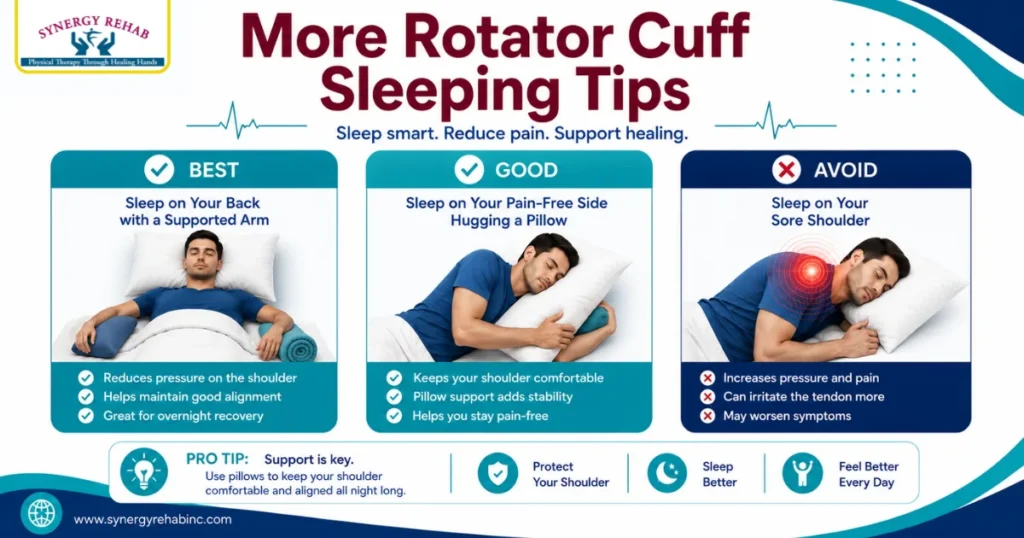
A few extra rotator cuff sleeping tips help. Support the arm fully so it never dangles. Keep a steady sleep routine, since better rest builds pain tolerance. If you are sleeping after rotator cuff injury or surgery, follow your clinician’s guidance, which sometimes includes a supportive cushion or recliner for a while. Warmth before bed can also relax the area.
| Do This | Avoid This |
|---|---|
| Sleep on your back with the arm on a pillow | Sleeping directly on the sore shoulder |
| Hug a pillow when on your good side | Letting the arm dangle or overstretch |
| Keep a steady sleep routine | Caffeine or screens right before bed |
Physical Therapy for Shoulder Pain in Southfield
Sleep setup helps, but lasting relief comes from treating the shoulder itself. With physical therapy for shoulder pain in Southfield, we find the cause, calm the tendon, and rebuild strength so nights get easier. In Michigan you can book directly, without a referral. For the full picture, see our complete guide to rotator cuff disorders.
Rest Easier, Starting Tonight
If shoulder pain is stealing your sleep, better positioning is a start, and real treatment is the fix. Book a shoulder assessment with Synergy Rehab, and we will help you sleep and heal.
Call (248) 298-0433 or visit synergyrehabinc.com. Find us at Farmbrook Medical Building 2, 29877 Telegraph Rd, Suite 303, Southfield, MI, open Monday to Friday. No referral is needed in Michigan.
FAQs About Sleeping Position for Rotator Cuff Pain
Q1. What Is the Best Way to Sleep With Rotator Cuff Pain?
Sleep on your back with the sore arm supported on a pillow, or on your pain-free side while hugging a pillow with the top arm. Both keep the shoulder supported and unloaded. Avoid lying directly on the painful shoulder, which compresses irritated tendons.
Q2. Why Is My Shoulder Worse at Night?
Lying down shifts pressure and blood flow around the joint, and rolling onto the shoulder squeezes sore tendons. With fewer distractions, you notice the pain more. This is why rotator cuff pain at night can feel sharper, even when the shoulder has not actually worsened.
Q3. Can I Sleep on My Side With Shoulder Pain?
Yes, on your pain-free side. Lie on the good shoulder, keep the sore shoulder slightly forward, and hug a pillow with the top arm for support. This reduces shoulder pain while sleeping. Avoid lying directly on the affected shoulder.
Q4. How Should I Sleep After a Rotator Cuff Injury or Surgery?
When sleeping after rotator cuff injury or surgery, follow your clinician’s guidance. Many people do best on the back with the arm supported, and some use a supportive cushion or recliner for a period. The goal is to keep the shoulder supported and unstressed.
Q5. Do Special Pillows Help?
They can. A body pillow or a wedge helps keep the arm supported and stops you from rolling onto the sore side. The pillow matters less than the principle: full support for the arm and no direct pressure on the painful shoulder.
Q6. When Should I See a Physical Therapist?
See a physical therapist if night pain is frequent, disrupts sleep, or comes with weakness or stiffness. In Michigan you can book with a Physical Therapist in Southfield directly, without a referral. Treating the shoulder, along with these sleeping tips, is the most reliable way to get comfortable nights back.