
If your lower back hurts when you bend over, you are not alone. Lower back pain when bending is one of the most common back complaints. Most of the time it comes from a simple muscle strain, but it can also point to a disc or posture problem. The good news is that most cases improve with the right care.
This guide explains why bending hurts, the most common causes, and simple ways to ease the pain and keep it from coming back.
Why Does Bending Over Hurt Your Lower Back?
When you bend forward, your lower spine and the soft discs between the bones take on extra load. Your back muscles also stretch and work hard to hold you steady. If a muscle is tight or weak, or a disc is irritated, this everyday movement can trigger pain. That is why lower back pain when bending over usually points to a problem with your muscles, posture, or discs, rather than the bending itself.
Common Causes of Lower Back Pain When Bending

Here are the most common reasons your back hurts when you fold forward.
- Muscle strain. Bending or lifting the wrong way can overstretch the muscles. A muscle strain lower back injury is the top cause of pain when bending.
- Poor lifting habits. Bending from the waist instead of the knees puts heavy pressure on the lower spine.
- Herniated or bulging disc. Bending forward squeezes the discs. A worn or bulging disc can press on a nerve and cause sharp pain or tingling down the leg.
- Tight hamstrings. When the muscles behind your thighs are tight, your lower back has to bend more, which adds strain.
- Weak core. Weak stomach and back muscles leave your spine with less support when you move.
- Facet joint irritation. The small joints along your spine can get irritated and ache when you bend.
Is It a Muscle Strain or a Disc Problem?
Knowing the difference helps you choose the right care. A muscle strain lower back problem usually feels like a dull ache or tightness that eases with rest and gentle movement. A disc problem often causes sharp pain that may shoot into the buttock or leg, along with tingling or numbness. If you feel pain in lower back when bending that travels down your leg, it is worth getting checked.
When Should You See a Doctor?
Most pain settles within a week or two. But some signs mean you should get help sooner.
- Pain that shoots down one or both legs
- Numbness, tingling, or weakness in the legs or feet
- Pain that does not improve after two weeks
- Pain that starts after a fall or a heavy lift
- Trouble controlling your bladder or bowels, which needs urgent care
These can be signs of a nerve or disc issue that needs proper treatment, so do not wait them out.
How to Relieve and Prevent It
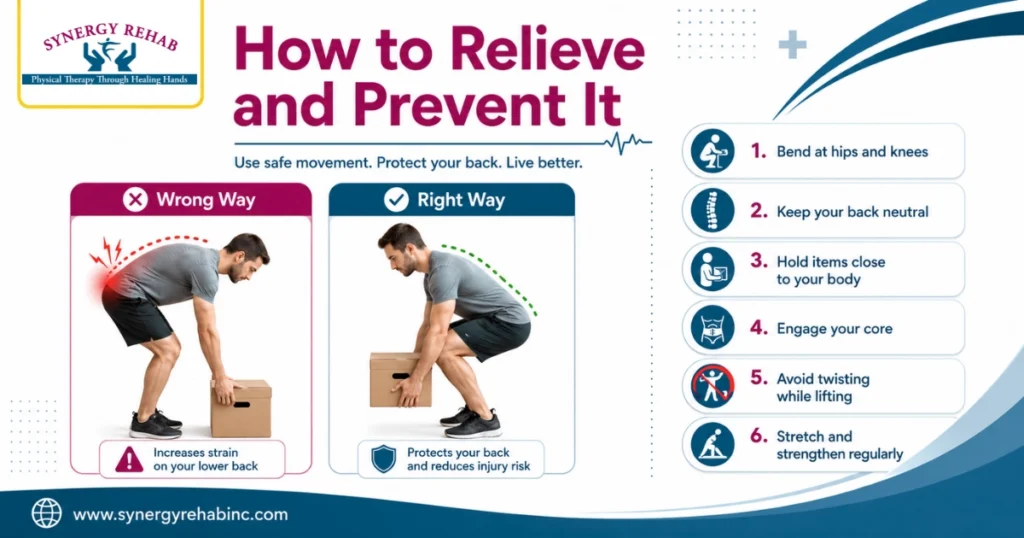
You can ease most cases of pain in lower back when bending at home, and a few simple habits can stop it from returning.
- Bend the right way. Hinge at your hips and knees, keep your back straight, and hold objects close to your body.
- Stretch your hamstrings. Looser hamstrings take pressure off your lower back.
- Strengthen your core. Strong muscles support your spine during everyday movements.
- Use ice, then heat. Ice calms swelling early on, while heat relaxes tight muscles later.
- Move often. Try not to sit or stand in one position for too long.
- Lift smart. Ask for help with heavy items, and avoid twisting while you lift.
How Physical Therapy Can Help
If your lower back hurts when bending week after week, physical therapy can make a real difference. A therapist finds the root cause, whether it is a tight muscle, a weak core, or a disc issue, and builds a plan to fix it. At Synergy Rehab, our physical therapy for back pain uses hands-on care, targeted exercises, and movement training, so you can bend, lift, and move with confidence again.
Bend and Move Without Pain

You do not have to dread bending over. Synergy Rehab offers expert physical therapy for back pain in Southfield, MI, led by Tapan Raut, PT, with more than 30 years of experience. Call (248) 298-0433 to book your appointment today.
FAQs About Back Pain When Bending
Q1. Why does my lower back hurt when I bend over but not when I stand?
Bending forward loads your spine and discs more than standing does. If a muscle is strained or a disc is irritated, that extra load triggers pain that often eases when you stand upright.
Q2. Should I rest or stay active with lower back pain when bending?
Gentle movement is usually better than full rest. Short walks and light stretches keep you loose, while long bed rest can make stiffness worse.
Q3. How do I know if it is a muscle strain or a disc?
A muscle strain lower back problem tends to ache and ease with rest. A disc issue often causes sharp pain or tingling that travels into the leg. A physical therapist can tell the two apart and treat the cause.
Q4. Can tight hamstrings cause lower back pain when bending over?
Yes. Tight hamstrings limit how far your hips move, so your lower back bends more to make up for it. Stretching them regularly often helps.