

The way you sleep can ease back and hip pain, or quietly make it worse. The best sleeping positions for back pain keep your spine in a neutral, supported line, so your muscles and discs can rest and recover overnight. For most people, sleeping on your back with a pillow under the knees, or on your side with a pillow between the knees, brings the most relief. In this guide, a physical therapist shares five positions and simple tips for a better night.
Why Sleep Position Matters for Back and Hip Pain
You spend about a third of your life in bed, so your sleep position has a big effect on your back. A poor position twists the spine and squeezes the discs, leaving you stiff and sore in the morning. A good position keeps your spine, hips, and shoulders in a straight line. Knowing how to sleep with back pain can mean the difference between waking up refreshed or aching. That is why the best sleeping positions for back pain all share one goal: keeping the spine neutral so it can heal while you rest.
The 5 Best Sleeping Positions for Lower Back and Hip Pain
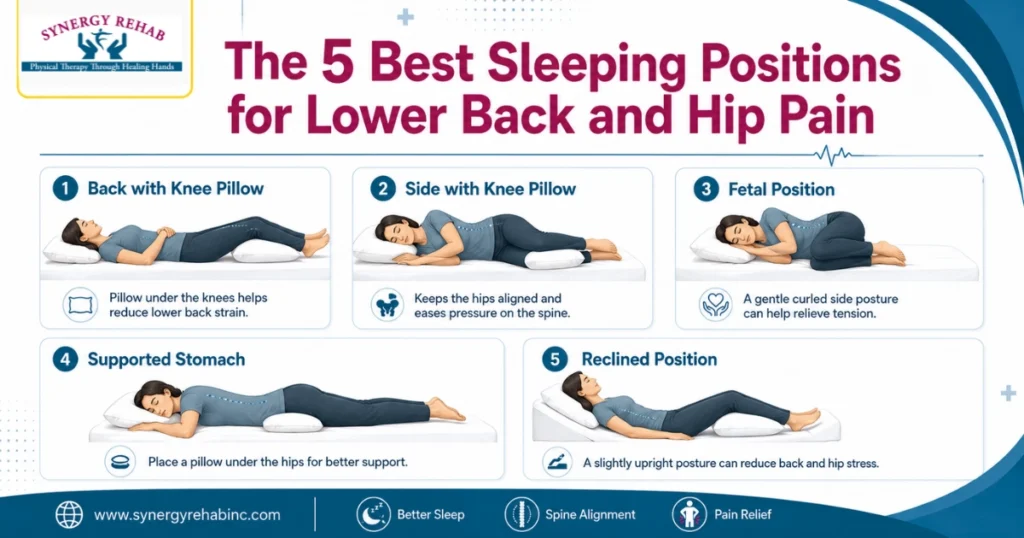
Here are five sleeping positions for back pain and hip relief. Try each one and stick with whichever feels best for your body.
1. On Your Back With a Pillow Under Your Knees
This is often the best way to sleep with back pain, because it spreads your weight evenly.
- Lie flat on your back.
- Place a pillow under your knees to support the natural curve of your spine.
- Add a small rolled towel under your lower back if it feels more comfortable.
2. On Your Side With a Pillow Between Your Knees
This is great for hip pain, since it keeps your hips and spine in line.
- Lie on your side with your knees slightly bent.
- Put a firm pillow between your knees so your top leg does not pull your spine out of line.
- Use a head pillow that keeps your neck level with your spine.
3. The Fetal Position
Curling up gently can help if you have a herniated disc.
- Lie on your side and tuck your knees toward your chest.
- Keep the curl gentle, not tight.
- Switch sides now and then so you do not always load the same hip.
4. On Your Stomach With a Pillow Under Your Hips
Stomach sleeping is usually the hardest on the back, but this tweak helps if you cannot sleep any other way.
- Place a thin pillow under your pelvis and lower stomach.
- Use a very flat head pillow, or none at all.
- This takes some pressure off your lower spine.
5. Reclined, With Your Upper Body Raised
Sleeping slightly upright can ease pain from spinal stenosis.
- Use an adjustable bed or a wedge pillow.
- Raise your upper body so your hips and knees are gently bent.
- This opens up the space in your lower spine.
The Best Way to Sleep With Sciatica
If sciatica keeps you awake, a few sciatica sleep tips can help. Sleep on your pain-free side, or on your back with a pillow under your knees, to take pressure off the nerve. A pillow between or under the knees keeps your spine neutral and reduces the pull on the sciatic nerve. If one side flares your symptoms, switch to the other.
Simple Sleep Tips for Less Back Pain
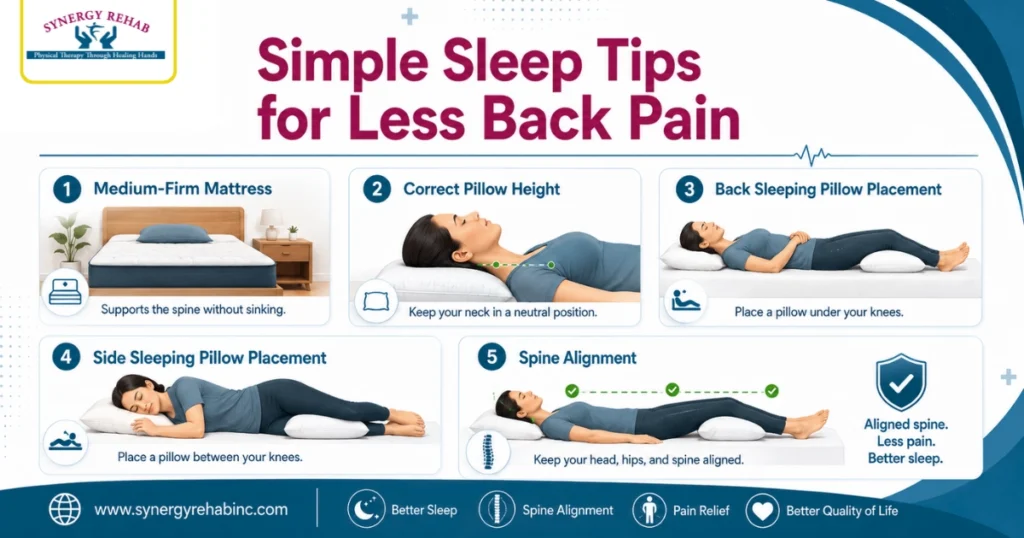
These sleep tips for back pain make any position more comfortable.
- Choose a supportive mattress. Medium-firm usually suits back pain best.
- Replace a sagging mattress. An old, dipping mattress lets your spine sink out of line.
- Get the right pillow. Your head should stay level with your spine, not propped too high.
- Roll, do not twist. Move your whole body together when you turn over.
- Keep a steady routine. Going to bed and waking at the same time helps your body recover.
With the right setup and a few simple sleep tips for back pain, back pain relief while sleeping is within reach for most people.
Sleeping Habits to Avoid
A few habits tend to make back pain worse overnight. Try to avoid these.
- Flat stomach sleeping with no pillow support, which arches the lower back
- Curling into a tight ball that rounds the spine too far
- A mattress that is too soft or too firm for your body
- Stacking high pillows that bend your neck forward
When Should You See a Doctor?
Good sleep habits ease most back pain. But see a professional if you notice any of these signs.
- Pain that wakes you most nights
- Pain that spreads down one or both legs
- Numbness, tingling, or weakness in the legs or feet
- Pain that does not improve after two weeks
- Trouble controlling your bladder or bowels, which needs urgent care
How Physical Therapy Can Help
If poor sleep and back pain keep feeding each other, back pain physical therapy can break the cycle. A therapist finds the cause of your pain and gives you positions, stretches, and exercises so you can rest and heal better. At Synergy Rehab, our back pain physical therapy combines hands-on care with simple home advice, so you can finally get back pain relief while sleeping and wake up feeling better.
Sleep Better, Hurt Less

You deserve a pain-free night. If back pain is stealing your sleep, Synergy Rehab offers expert back pain physical therapy in Southfield, MI, led by Tapan Raut, PT, with more than 30 years of experience. Call (248) 298-0433 to book your appointment today.
FAQs About Sleeping With Back Pain
Q1. What is the best sleeping position for lower back pain?
Sleeping on your back with a pillow under your knees is often the best way to sleep with back pain, because it keeps your spine neutral. Side sleeping with a pillow between the knees is a close second, especially for hip pain. The best sleeping positions for back pain all keep your spine in a supported, neutral line.
Q2. How should I sleep to relieve sciatica?
Lie on your pain-free side, or on your back with a pillow under your knees. These sciatica sleep tips ease pressure on the nerve and help you rest more comfortably.
Q3. Does my mattress affect back pain?
Yes. A sagging or overly soft mattress lets your spine sink out of line. A medium-firm mattress usually gives the best support for back pain relief while sleeping.
Q4. Why is my back pain worse in the morning?
Morning pain often comes from a poor sleep position, an old mattress, or stiffness from staying still all night. Better support and gentle morning stretches usually help. If it continues, learning how to sleep with back pain from a physical therapist can make a real difference.