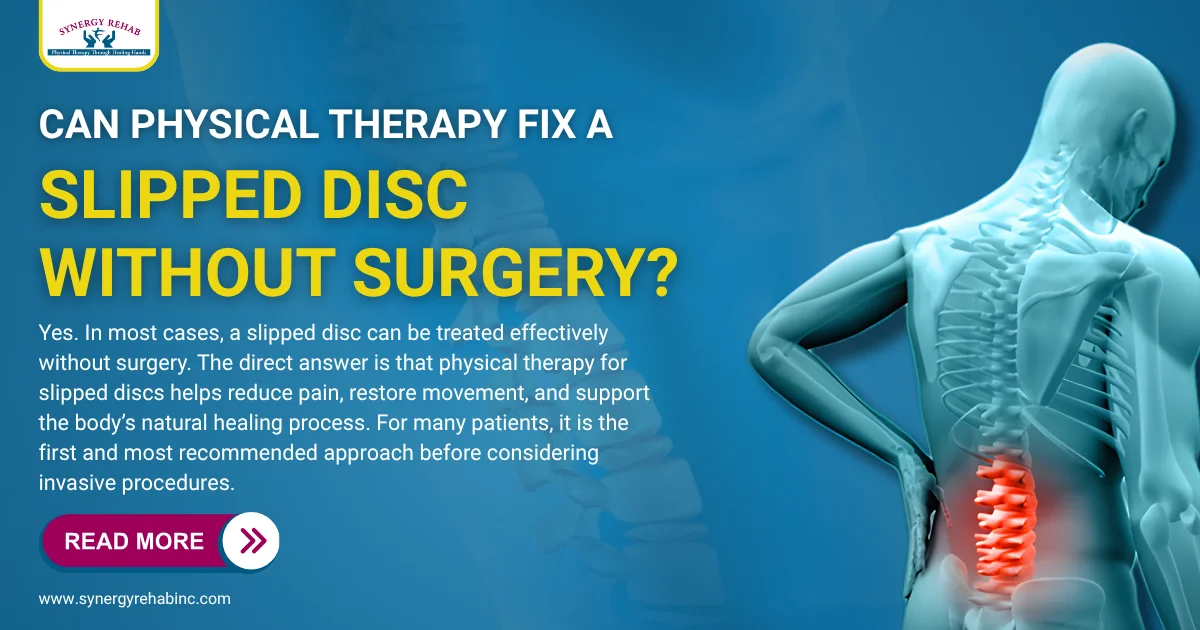
Yes. In most cases, a slipped disc can be treated effectively without surgery. The direct answer is that physical therapy for slipped discs helps reduce pain, restore movement, and support the body’s natural healing process. For many patients in the U.S., it is the first and most recommended approach before considering invasive procedures.
A slipped disc does not always need to be “fixed” structurally. What matters is whether symptoms improve and function returns. That is exactly what a well-designed therapy plan targets.
What a Slipped Disc Really Means for Your Body

A slipped or herniated disc is not just a structural issue. It is a functional problem. The disc bulges or leaks slightly, which can irritate nearby nerves. This irritation is what causes pain, not just the disc itself.
In daily life, this shows up as difficulty sitting, bending, or even walking comfortably. Many patients assume the condition will worsen without surgery, but in reality, the body often adapts and heals with the right stimulus.
That is where Physical therapy for slipped discs becomes important. It shifts the focus from fear and rest to controlled recovery.
How Physical Therapy Fixes the Problem Without Surgery
Therapy works by changing how your spine handles stress. It does not rely on medication masking pain or surgical correction.
Instead, it focuses on restoring balance in the body. Muscles, joints, and movement patterns are retrained so the disc is no longer under excessive pressure.
Over time, inflammation decreases, nerve irritation settles, and movement becomes easier. This process leads to consistent relief from herniated disc pain without surgical risks.
Many patients begin to notice changes within a few weeks when therapy is done correctly.
What Makes Non-Surgical Treatment Effective
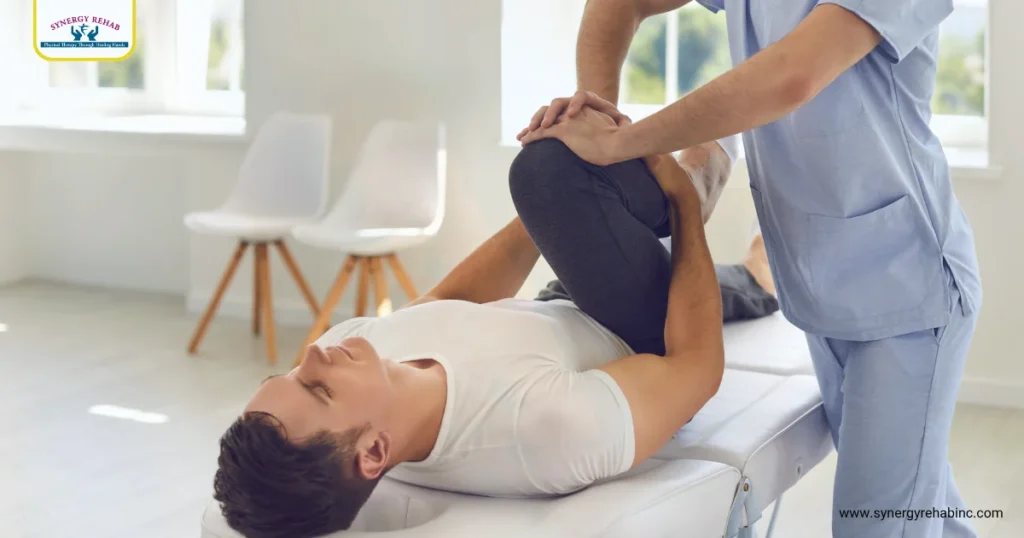
Modern rehabilitation in the U.S. has shifted away from passive care toward active recovery. This means patients are guided to move correctly rather than avoid movement.
The success of Slipped disc treatment without surgery depends on three factors: the accuracy of diagnosis, the quality of movement correction, and patient consistency.
When these align, outcomes are often better than expected. Pain reduces, strength improves, and daily activities become manageable again.
5 Common Mistakes People Make With a Slipped Disc
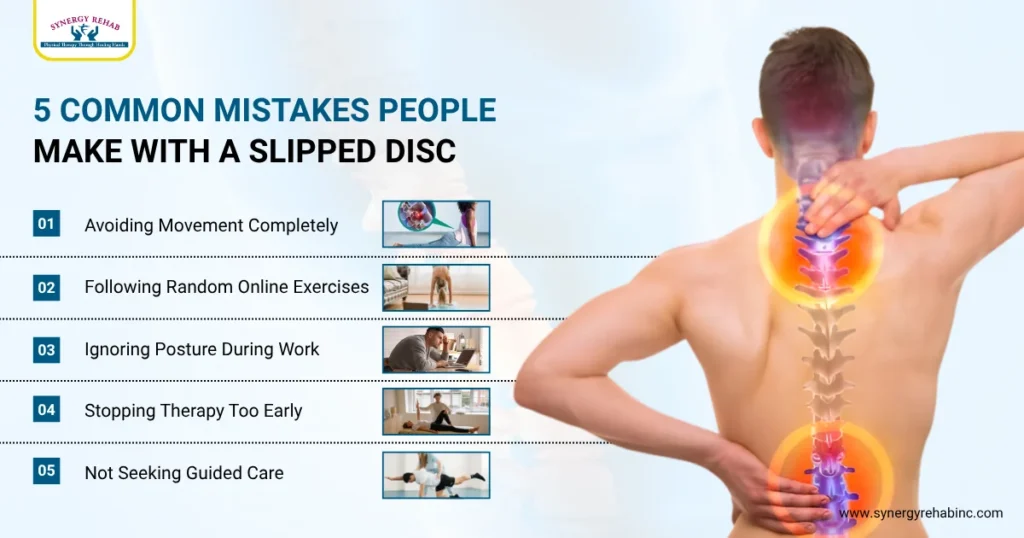
Many delays in recovery are not due to the condition itself but due to incorrect approaches.
1. Avoiding Movement Completely
Resting too much weakens muscles and increases stiffness. This can worsen symptoms over time.
2. Following Random Online Exercises
Generic routines may not suit your specific condition and can increase irritation.
3. Ignoring Posture During Work
Sitting for long hours with poor alignment keeps stressing the disc.
4. Stopping Therapy Too Early
Pain reduction does not mean full recovery. Stopping early often leads to relapse.
5. Not Seeking Guided Care
Working with a Back Pain Physical Therapist in Southfield ensures your recovery plan is structured and safe.
Avoiding these mistakes significantly improves the effectiveness of Physical therapy for slipped discs.
What a Real Therapy Plan Looks Like
A proper rehabilitation plan is progressive. It evolves as your condition improves.
In the early stage, the focus is on calming pain and improving basic movement. As symptoms reduce, the plan shifts toward strengthening and stability.
Eventually, therapy prepares you to return to normal activities without fear of re-injury.
This step-by-step progression is what makes Slipped disc treatment without surgery reliable rather than temporary.
When Physical Therapy Alone is Enough
Not every slipped disc case is severe. Many patients recover fully with non-surgical care.
Therapy is usually sufficient when pain is manageable, symptoms are stable, and there is no major neurological loss. Improvement with movement is also a strong indicator that surgery is not needed.
In these situations, continuing Physical therapy for a slipped disc leads to steady recovery and long-term improvement.
When You Should Still Consider Medical Intervention for a Slipped Disc
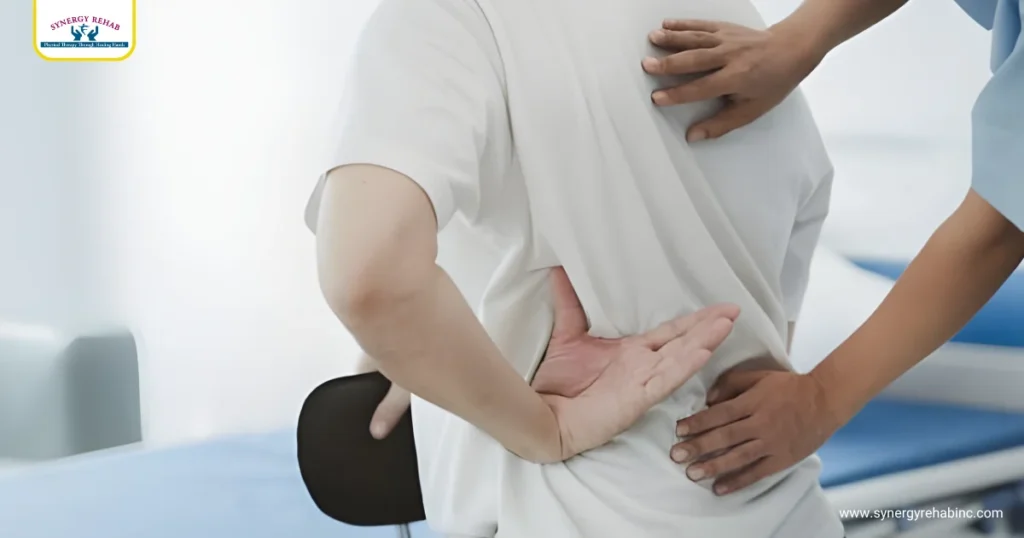
There are cases where additional medical support becomes necessary. If symptoms worsen despite therapy or if there is significant weakness or loss of control, further evaluation is required.
However, even in these situations, therapy remains part of the overall treatment process. It supports recovery before and after any advanced intervention.
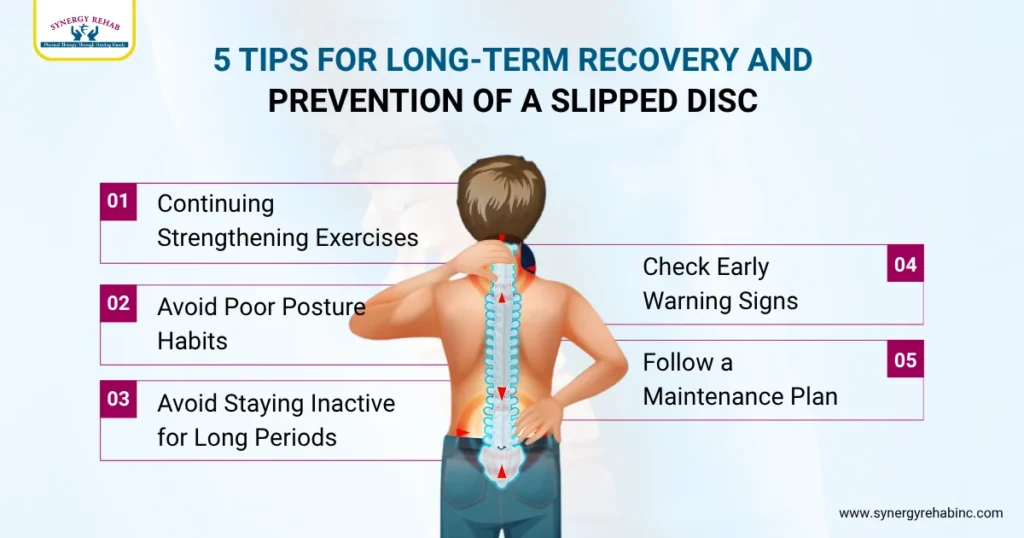
5 Tips for Long-Term Recovery and Prevention of a Slipped Disc
Once pain reduces, the focus should shift toward preventing the problem from returning. A slipped disc can come back if the root causes are not properly addressed.
1. Continuing Strengthening Exercises
Stopping all exercises after pain relief can weaken spinal support again. Maintaining strength is essential for stability and long-term recovery.
2. Avoid Poor Posture Habits
Slouching while sitting or incorrect lifting techniques can gradually recreate the same stress on the spine that caused the issue.
3. Avoid Staying Inactive for Long Periods
Prolonged sitting or lack of movement increases stiffness and pressure on the discs, slowing down full recovery.
4. Check Early Warning Signs
Mild discomfort or stiffness is often dismissed. Addressing these signs early can prevent a full relapse.
5. Follow a Maintenance Plan
Continuing light physical therapy routines for a slipped disc helps maintain mobility and prevents future flare-ups.
This long-term approach is what separates temporary relief from lasting results.
How Synergy Rehab Supports this Recovery Journey
At Synergy Rehab, the focus is on functional recovery rather than short-term symptom control. Treatment is designed around how your body moves in real situations, not just clinical testing.
Patients working with a back pain physical therapist at Synergy Rehab in Southfield receive care that adapts as their condition improves. The process is structured, monitored, and tailored to individual needs.
This approach helps patients achieve consistent relief from herniated disc pain while building strength and confidence in movement.
For those looking for slipped disc treatment without surgery, synergyrehab provides a clear path that connects pain reduction with long-term physical resilience.
FAQs about Physical Therapy: Fix a Slipped Disc
Q1. Can physical therapy for a slipped disc avoid surgery?
Yes, in many cases, physical therapy for a slipped disc helps reduce pain, improve mobility, and restore spinal function without the need for surgery. It focuses on correcting the root cause rather than just managing symptoms.
Q2. How long does it take to get relief from herniated disc pain with therapy?
Most patients start to notice relief from herniated disc pain within a few weeks of consistent therapy. Full recovery may take several weeks, depending on severity and adherence to the plan.
Q3. Is slipped disc treatment without surgery effective for long-term recovery?
Yes, Slipped disc treatment without surgery is often effective when combined with proper exercises, posture correction, and lifestyle changes. It not only reduces pain but also prevents recurrence.
Q4. When should I see a back pain physical therapist in Southfield?
You should consult a Back Pain Physical Therapist in Southfield as soon as you notice persistent back pain, radiating discomfort, or limited mobility. Early intervention improves recovery outcomes.
Q5. What methods are used in physical therapy for a slipped disc?
Physical therapy for a slipped disc typically includes targeted exercises, manual therapy, posture training, and movement correction techniques to reduce pressure on the affected disc.
Q6. Can a back pain physical therapist in Southfield help with the relief herniated disc pain?
Yes, a back pain physical therapist in Southfield provides personalized treatment plans that are designed to deliver effective relief from herniated disc pain while improving strength and mobility over time.