The Pain No One Warns New Mothers About
Childbirth changes everything. It transforms the body, reshapes priorities, and introduces a powerful new rhythm to life. But for many women, the joy of welcoming a baby is accompanied by an unexpected discomfort that makes simple activities like sitting, standing, or even feeding the baby painful.
That discomfort often turns out to be tailbone pain after birth.
Many mothers assume it is just another temporary postpartum ache. Some try to ignore it, focusing instead on their newborn. But when the pain persists, sitting becomes unbearable, getting up from a chair feels like a sharp stab, and everyday movements start to feel exhausting.
The good news is that this condition has a name, a cause, and most importantly, effective solutions.
As a physical therapist working with postpartum patients, I often reassure mothers that recovery is absolutely possible. With the right understanding, targeted therapy, and gentle movement, tailbone pain after birth can be managed and often fully resolved.
What is Postpartum Coccydynia (Tailbone Pain)?
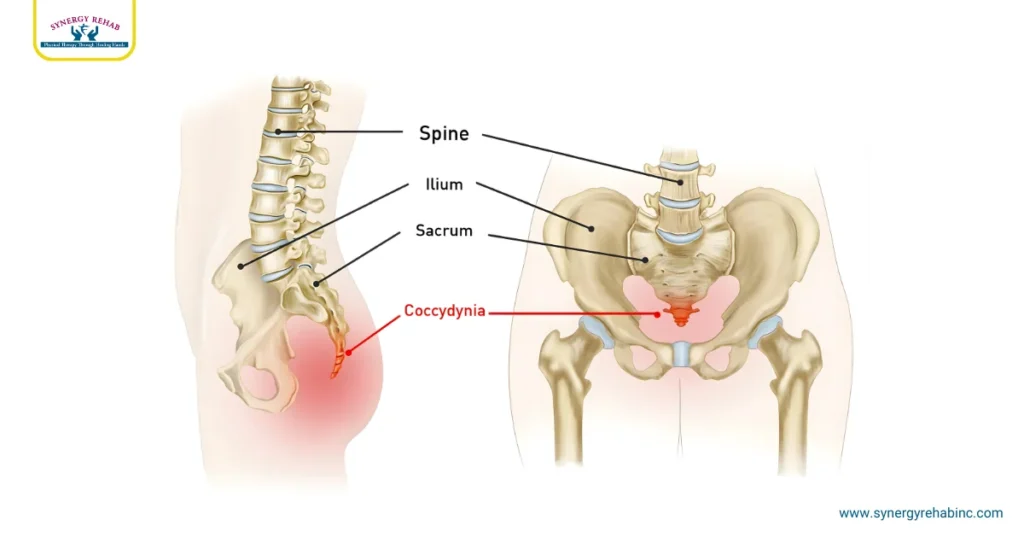
The tailbone, also known as the coccyx, sits at the base of the spine and plays a critical role in supporting the pelvic floor. During childbirth, this small structure undergoes immense pressure as the baby passes through the birth canal.
When excessive strain occurs, it can lead to inflammation, bruising, ligament strain, or in rare cases, dislocation of the coccyx. This condition is known as coccyx pain in women after childbirth, and it can make even basic movements uncomfortable.
For many mothers, the discomfort becomes noticeable when sitting on hard surfaces or transitioning from sitting to standing. Others experience a deep aching sensation that radiates through the pelvic floor or lower back.
Understanding why this happens is the first step toward meaningful recovery.
Why Does Tailbone Pain Happen After Childbirth?
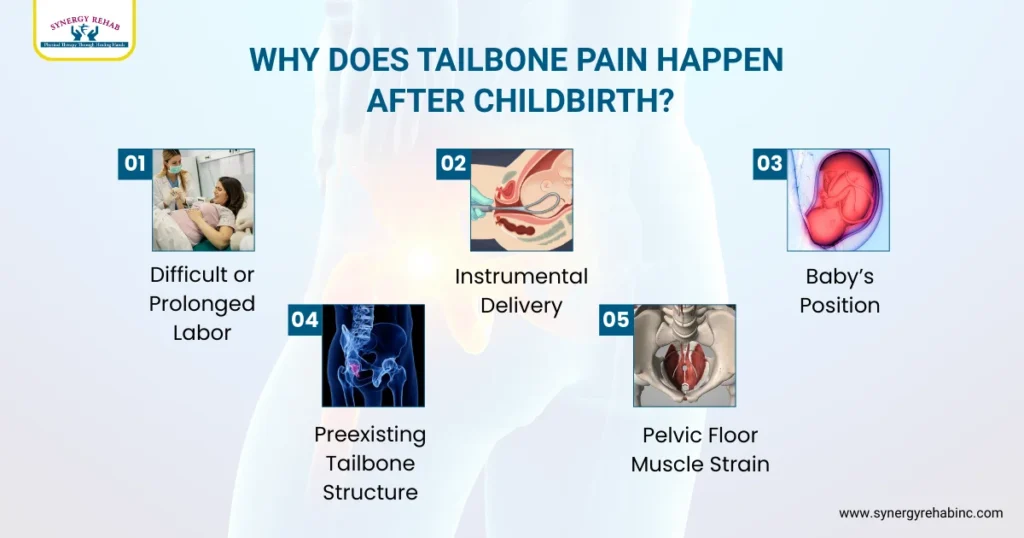
Childbirth places extraordinary mechanical stress on the pelvis. When the baby moves through the birth canal, the tailbone naturally shifts backward to create more space. In some cases, this movement exceeds the normal range and results in irritation or injury.
Several factors increase the likelihood of tailbone pain after birth, including:
1. Difficult or Prolonged Labor
Long labor increases pressure on the coccyx and surrounding ligaments.
2. Instrumental Delivery
Forceps or vacuum assisted births can increase stress on the tailbone.
3. Baby’s Position
Certain fetal positions place more pressure directly on the coccyx during delivery.
4. Preexisting Tailbone Structure
Some women naturally have a forward angled tailbone, which increases vulnerability to injury.
5. Pelvic Floor Muscle Strain
During labor, pelvic floor muscles stretch significantly. Since these muscles attach to the coccyx, tension or weakness can trigger coccyx pain in women after childbirth.
When these factors combine, inflammation and pain may persist long after delivery.
Recognizing the Symptoms of Tailbone Pain
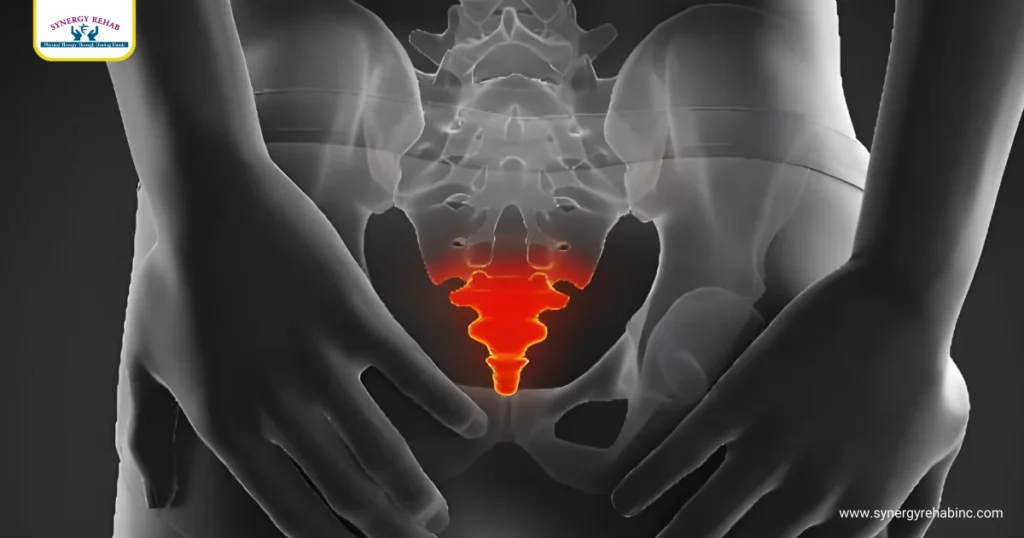
Tailbone injuries often present in subtle ways that are easy to dismiss early on. However, the symptoms usually follow recognizable patterns.
Common signs include:
- Sharp or aching pain at the base of the spine
- Discomfort while sitting for long periods
- Pain when standing up from a seated position
- Tenderness in the tailbone region
- Pain during bowel movements
- Discomfort during certain pelvic movements
Many mothers experiencing tailbone pain after birth describe the sensation as deep and persistent, especially when sitting on hard chairs or leaning backward.
Recognizing these symptoms early allows for faster intervention and smoother recovery.
Why Physical Therapy Is the Missing Piece in Recovery
Many mothers are told to simply rest and wait for the pain to disappear. While rest can help initially, prolonged inactivity often delays recovery.
This is where physical therapy for spinal dysfunction becomes essential.
The coccyx is not an isolated bone. It is connected to the entire pelvic system including the sacrum, pelvic floor muscles, ligaments, and lower spine. When dysfunction develops in this network, pain can persist long after the initial injury heals.
A structured physical therapy program addresses:
- Pelvic floor muscle tension
- Spinal alignment
- Core stability
- Pelvic mobility
- Postural imbalances
By correcting these factors, physical therapy for spinal dysfunction restores proper movement patterns and reduces stress on the coccyx.
For many patients, this approach dramatically improves recovery outcomes.
4 Tailbone Pain Treatments That Actually Works
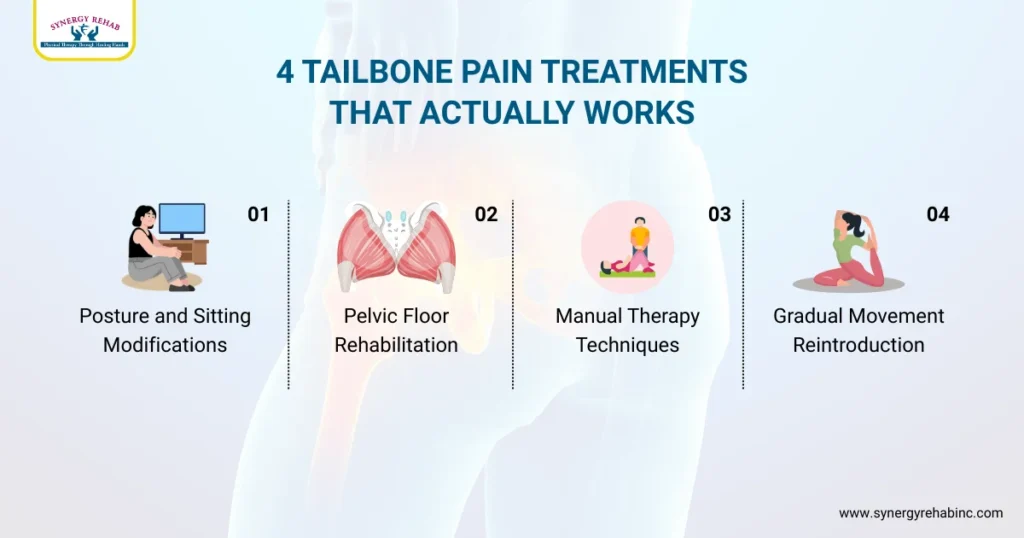
Treating postpartum tailbone pain requires a combination of targeted care strategies rather than a single solution. The most effective tailbone pain treatment plans focus on reducing pressure on the coccyx while restoring normal pelvic mechanics.
Here are some of the most impactful approaches.
1. Posture and Sitting Modifications
Many women unknowingly worsen their symptoms through sitting habits.
Helpful adjustments include:
- Using wedge cushions with coccyx cutouts
- Sitting upright with feet flat on the floor
- Avoiding slouched positions
- Limiting time on hard surfaces
These simple changes are often the first step in effective tailbone pain treatment.
2. Pelvic Floor Rehabilitation
Pelvic floor muscles attach directly to the tailbone. When they become overly tight or weak, pain can intensify.
Through guided therapy, patients learn:
- controlled pelvic relaxation
- coordinated breathing
- muscle strengthening without overloading the coccyx
This therapy also supports recovery from coccyx pain in women after childbirth
3. Manual Therapy Techniques
Hands on treatment can help release tension around the sacrum and pelvis.
These techniques improve mobility, reduce inflammation, and support long term healing as part of a comprehensive tailbone pain treatment program.
4. Gradual Movement Reintroduction
Movement is essential for healing. Carefully structured activity prevents stiffness and strengthens supporting muscles around the pelvis and spine.
5 Exercises That Help Relieve Tailbone Pain
Movement plays a powerful role in recovery. The right exercises for tailbone pain can reduce pressure on the coccyx while strengthening the muscles that stabilize the pelvis.
Before beginning any routine, it is important to move gently and stay within a comfortable range. Here are some exercises often recommended during postpartum recovery.
1. Diaphragmatic Breathing

Deep breathing relaxes pelvic floor muscles and reduces tension around the coccyx. Slow inhalation allows the abdomen to expand, while controlled exhalation helps reset pelvic muscle activity.
2. Pelvic Tilts

Pelvic tilts gently mobilize the lower spine and reduce stiffness. This exercise helps reconnect the core and pelvic floor without placing pressure on the tailbone.
3. Cat and Cow Movement
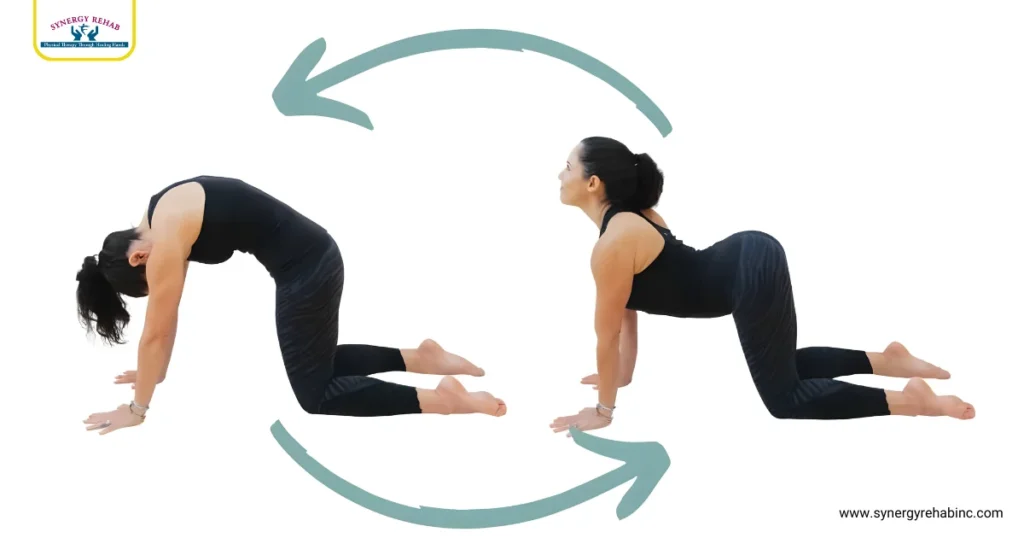
This gentle spinal movement improves circulation and mobility through the lower back and pelvis. Many patients find this one of the most effective exercises for tailbone pain during early recovery.
4. Child’s Pose Stretch
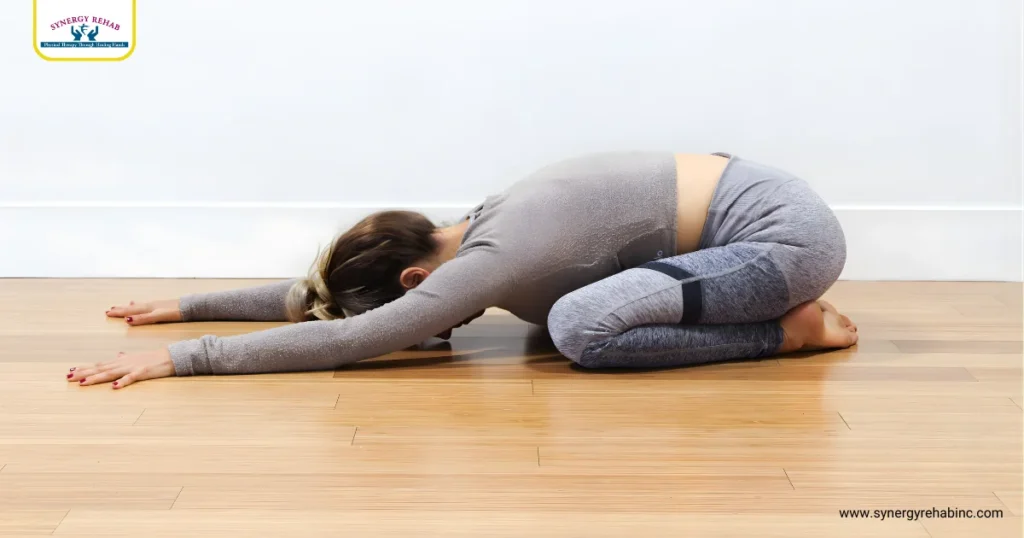
This position opens the pelvic floor and stretches muscles surrounding the coccyx. It encourages relaxation while reducing spinal compression.
5. Clamshell Strengthening
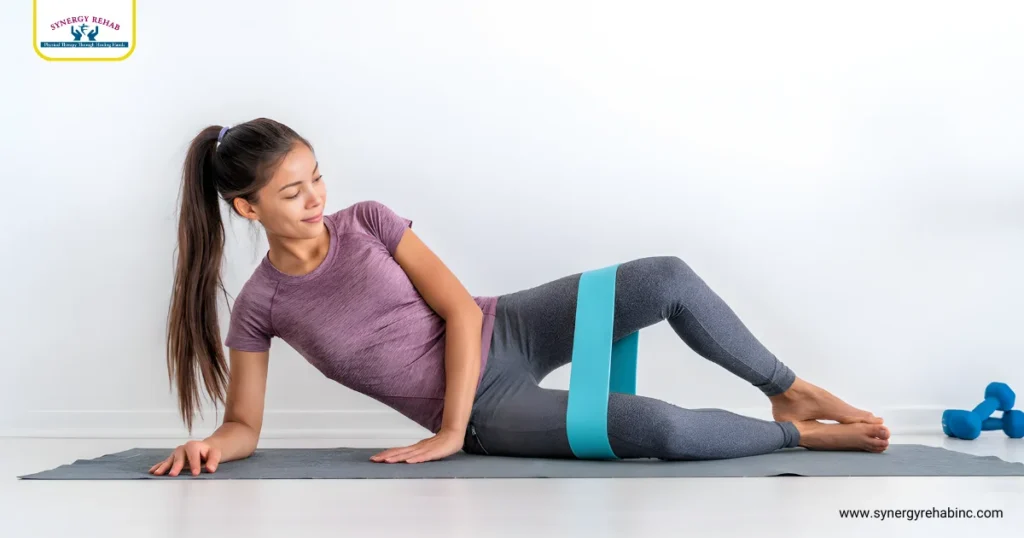
Clamshell exercises strengthen the gluteal muscles, which stabilize the pelvis and reduce tailbone stress. Practiced consistently, these exercises for tailbone pain support long term pelvic stability.
When Pain Persists Longer Than Expected
Most cases of tailbone pain after birth improve gradually within several weeks. However, persistent discomfort may indicate deeper biomechanical dysfunction. In these situations, professional guidance becomes critical.
A skilled Physical therapist in Southfield can assess pelvic alignment, spinal mobility, and muscle function to identify the root cause of lingering pain.
Targeted treatment often includes:
- pelvic floor retraining
- spinal alignment correction
- guided rehabilitation exercises
- postural education
Working with a knowledgeable Physical therapist in Southfield ensures that recovery is both safe and effective.
Many patients report dramatic improvement once underlying movement dysfunctions are addressed by a qualified Physical therapist in Southfield.
A Physical Therapist’s Insight for New Mothers
Postpartum recovery is often portrayed as something that simply happens with time. But healing is rarely passive.
Your body has undergone one of the most intense physical experiences possible. The pelvic system, spinal alignment, and muscular support network all need time and care to rebalance.
If you are experiencing tailbone pain after birth, listen to your body rather than pushing through discomfort. Pain is a signal that something in the movement system needs attention.
With the right guidance, most mothers regain comfort, mobility, and confidence far sooner than expected.
How Synergy Rehab Treats Tailbone Pain After Birth

At Synergy Rehab, a leading physical therapy clinic in Southfield, Michigan, postpartum rehabilitation is approached with compassion, clinical expertise, and personalized care.
Our therapists focus on identifying the root cause of tailbone pain after birth, addressing pelvic floor dysfunction, spinal alignment, and movement patterns that contribute to discomfort.
Through targeted rehabilitation programs and evidence based therapy techniques, our goal is simple, helping new mothers return to daily life without pain.
If sitting, feeding your baby, or simply getting through the day feels uncomfortable because of tailbone pain, our team is here to help.
Schedule a consultation with Synergy Rehab, your trusted physical therapy clinic in Southfield, Michigan, and take the first step toward a more comfortable postpartum recovery.
Frequently Asked Questions About Tailbone Pain
1. Can a tailbone injury from childbirth heal on its own?
Yes, mild cases often improve gradually with rest and posture adjustments. However, persistent pain usually benefits from guided rehabilitation and pelvic floor therapy.
2. Is sitting on a donut cushion helpful for coccyx pain?
Donut cushions can sometimes increase pressure around the coccyx. Wedge shaped cushions with a tailbone cutout tend to provide better relief.
3. How soon can postpartum women begin gentle exercises?
Light mobility and breathing exercises can often begin early in recovery, but more structured strengthening should follow medical guidance.
4. Can tailbone pain affect pelvic floor health?
Yes, coccyx discomfort is often connected to pelvic floor muscle tension or weakness, which is why targeted therapy can be highly effective.
5. When should someone seek professional treatment for tailbone pain?
If pain persists for several weeks, worsens while sitting, or interferes with daily activities, consulting a physical therapy professional is recommended.