
If your back aches after hours at a desk, you are not alone. Back pain while sitting is one of the most common complaints, especially for people who work at a computer all day. The reason is simple: sitting puts more pressure on your lower spine than standing does, and slouching makes it worse. The good news is that small changes to your posture and routine can bring real relief.
This guide explains why sitting hurts your back and exactly what to do about it, from better posture to simple stretches you can do at your desk.
Why Does Sitting Cause Back Pain?
Sitting may feel restful, but it is surprisingly hard on your spine. When you sit, the discs in your lower back take on more load than when you stand, especially if you slouch. Your hip muscles tighten, your glutes switch off, and your core stops working. Over time, this mix leads to back pain from sitting. The longer you stay in one position, the stiffer and sorer your back becomes.
Common Causes of Back Pain While Sitting
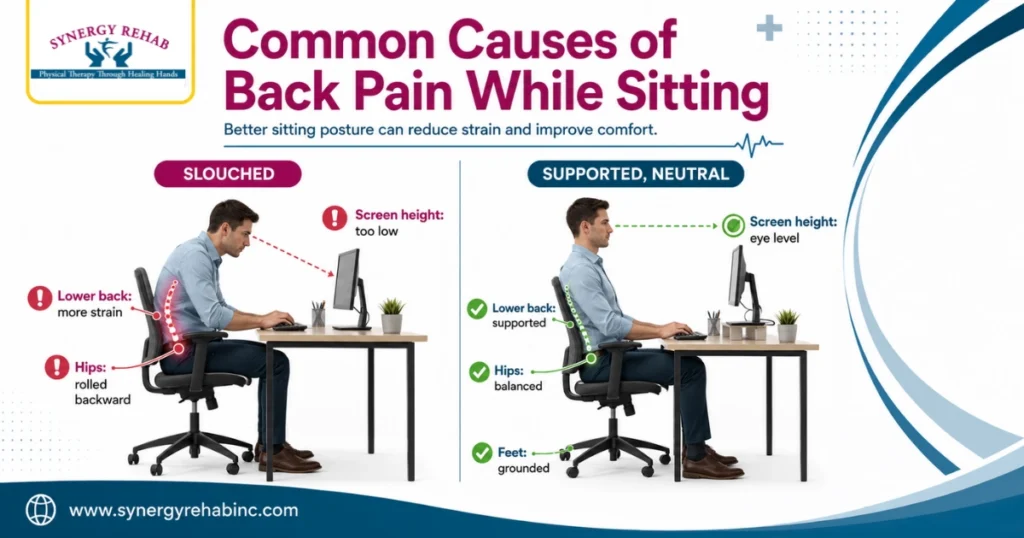
Several things can make your lower back hurt when you are seated. Here are the most common.
- Poor posture. Slouching or leaning forward rounds your lower back and strains the discs.
- Sitting too long. Staying still for hours stiffens muscles and joints, which is often why your lower back hurts while sitting at a desk all day.
- A poorly set-up chair. A seat with no support lets your spine drop out of its natural curve.
- Weak core. Without strong stomach and back muscles, your spine has to work harder to stay upright.
- Tight hips. Hours of sitting shorten the hip muscles, which then pull on the lower back.
- An existing disc problem. Sitting can press on a sensitive disc and cause pain in lower back when sitting.
How to Fix Your Sitting Posture
Good posture takes pressure off your spine. Set up your chair and desk like this.
- Sit back fully so the chair supports your lower back. Add a small cushion if needed.
- Keep your feet flat on the floor, with knees level with or slightly below your hips.
- Relax your shoulders and keep your elbows close to your sides at about a right angle.
- Place your screen at eye level so you are not looking down.
- Keep your back gently upright, not stiff and not slouched.
Simple Ways to Relieve Back Pain From Sitting
Beyond posture, these habits ease back pain from sitting and stop it from building up.
- Move every 30 minutes. Stand, stretch, or take a short walk to reset your spine.
- Break up long sittings. A good rhythm is to sit, then stand or move for a couple of minutes each half hour.
- Stretch at your desk. Gentle stretches loosen tight hips and your lower back.
- Strengthen your core. A strong core supports your back during long sitting sessions.
- Use heat or ice. Heat relaxes tight muscles, while ice calms a sore spot after a long day.
Quick Desk Stretches to Try
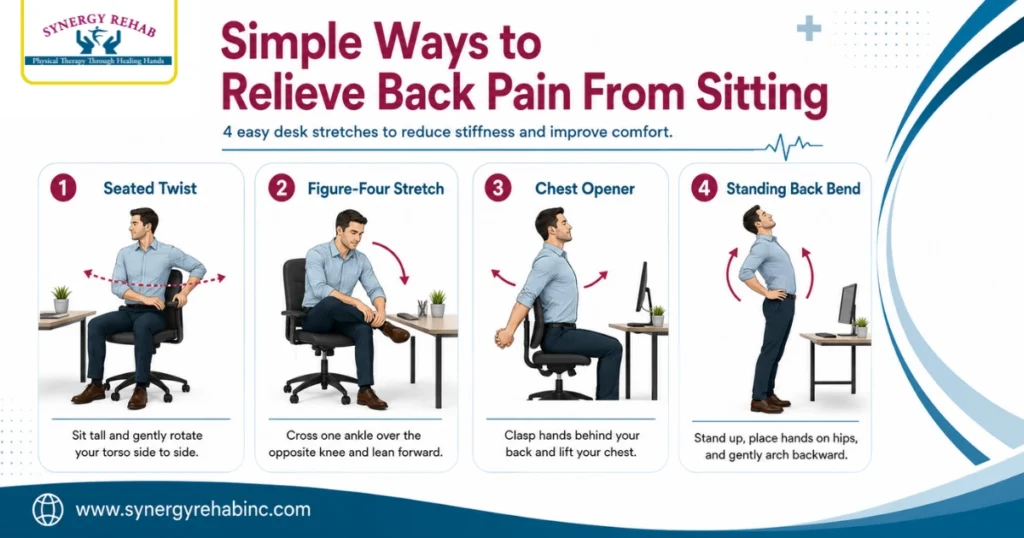
You can do these right at your chair to ease pain in lower back when sitting.
- Seated twist. Sit tall and slowly turn your upper body to one side, then the other.
- Seated figure-four. Cross one ankle over the opposite knee and lean forward gently.
- Chest opener. Clasp your hands behind you and gently lift to undo a hunched posture.
- Standing back bend. Stand, place your hands on your lower back, and gently lean back.
Do Standing Desks Help With Back Pain?
Many people ask whether a standing desk can fix back pain while sitting. It can help, but only as part of the picture. Standing all day is not the goal either, and it can bring its own aches. The real fix is movement. A sit-stand desk works best when you switch positions often, rather than staying frozen in one. Most people notice their lower back hurts while sitting far less once they simply start moving more during the day.
- Alternate between sitting and standing through the day.
- Keep your screen at eye level in both positions.
- Move or stretch for a couple of minutes each time you switch.
If you do not have a standing desk, getting up for short, regular breaks gives you most of the same benefit.
When Should You See a Doctor?
Most back pain while sitting eases with better habits. But see a professional if you notice any of these signs.
- Pain that spreads down one or both legs
- Numbness, tingling, or weakness in the legs or feet
- Pain that does not improve after two weeks
- Pain that wakes you at night
- Trouble controlling your bladder or bowels, which needs urgent care
How Physical Therapy Can Help
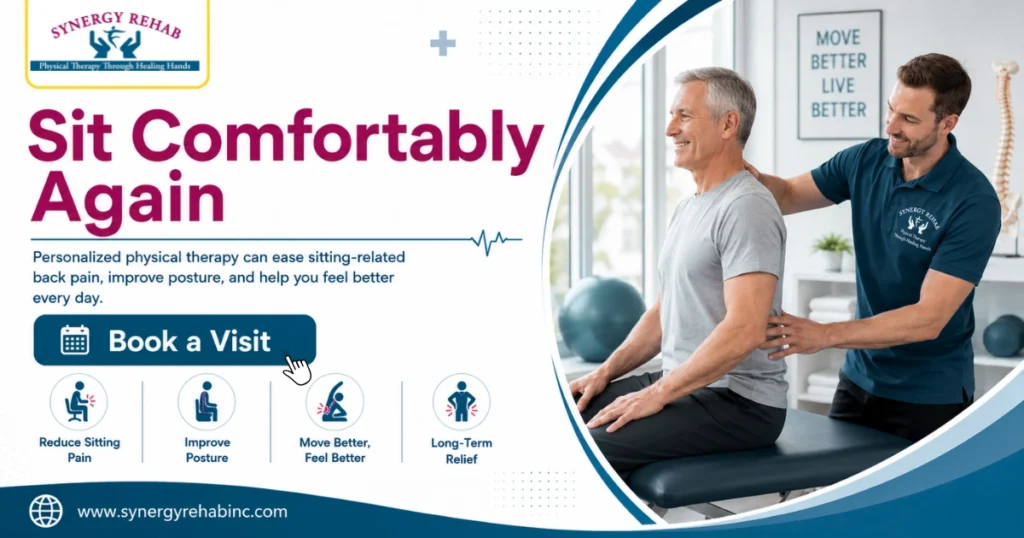
If your lower back hurts while sitting week after week, physical therapy can help you fix it for good. A therapist checks your posture, core strength, and flexibility to find the real cause. At Synergy Rehab, our physical therapy for back pain includes hands-on care, posture training, and targeted exercises, so you can sit, work, and move without pain.
Sit Comfortably Again
You do not have to dread your desk. If back pain while sitting is slowing you down, Synergy Rehab offers expert physical therapy for back pain in Southfield, MI, led by Tapan Raut, PT, with more than 30 years of experience. Call (248) 298-0433 to book your appointment today.
FAQs About Back Pain While Sitting
Q1. Why does my back hurt when I sit but not when I stand?
Sitting puts more pressure on your lower discs than standing, and it is easier to slouch in a chair. If a disc or muscle is already sensitive, that extra load triggers pain that eases when you stand up.
Q2. How should I sit to avoid back pain?
Sit back fully with your lower back supported, feet flat, knees level with your hips, and your screen at eye level. Most important of all, do not stay in one position for too long.
Q3. Can sitting too long cause lasting back problems?
It can. Long hours of sitting with poor posture can weaken your core, tighten your hips, and stress your discs over time. Regular movement and good posture prevent most of this, which is why a daily routine matters.
Q4. What helps back pain from sitting at work?
Take regular movement breaks, fix your chair setup, stretch at your desk, and strengthen your core. If the pain keeps coming back, a physical therapist can build a plan made for you.